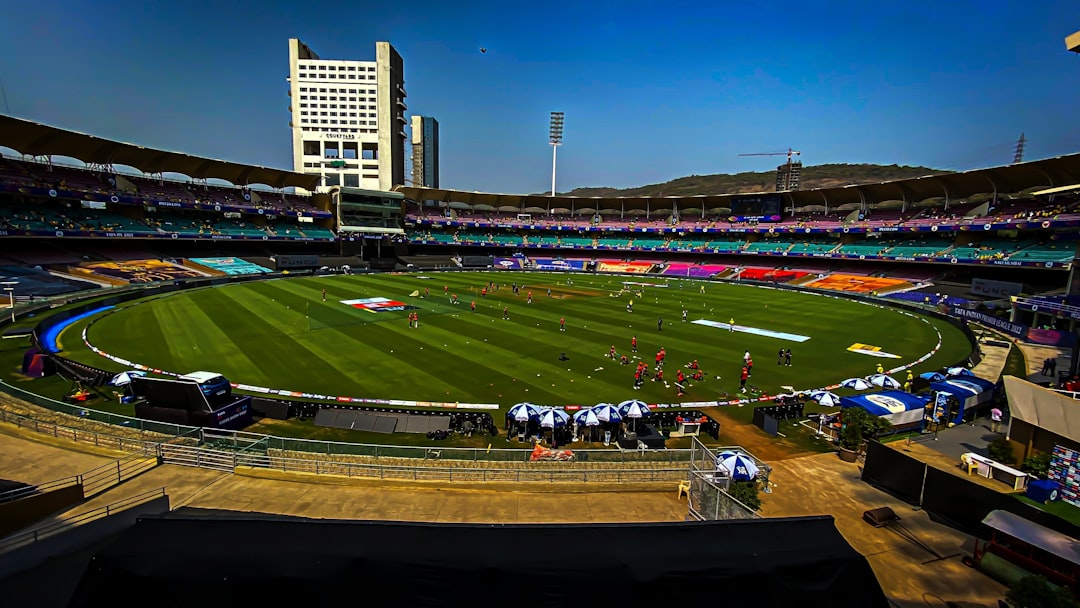
Cricket has entered a phase where the best domestic teams no longer win only by finding the right XI; they win by making the right decisions faster. That is why the idea of an AI lab for cricket is so compelling. Borrowing from the enterprise world, a cricket technology accelerator can turn raw data into production-ready analytics in a single season rather than a multi-year experiment. The model is simple in concept but demanding in execution: pair domain experts with data scientists, define high-value problems, build in sprints, validate against real match conditions, and ship tools coaches can actually use on match day.
The 90-day accelerator approach is especially relevant for domestic cricket because these environments sit at the intersection of budget constraints, high performance pressure, and uneven data quality. Teams need better match prep, more reliable injury prediction, and stronger fan engagement without creating another dashboard nobody opens. That is the lesson from enterprise AI programs such as BetaNXT’s AI Innovation Lab, which emphasizes practical workflows, data governance, and embedded decision support rather than AI for hype’s sake. For a cricket-specific lens on how AI strategy must fit the use case, see our guide on why AI prompting strategy should match the product type and the broader operating-model thinking in choosing AI compute for inference and agentic systems.
What a Cricket AI Lab Actually Is
A cricket AI lab is not a room full of laptops, a couple of interns, and a chatbot demo. It is a structured innovation engine that turns a team’s tactical, medical, and fan-data questions into testable products. In practice, the lab sits between the coaching staff, performance analysts, physios, video scouts, and a data science squad that can clean data, build models, and deploy tools. Its purpose is to reduce the gap between what people know instinctively from watching cricket and what can be proven with measurable signals.
Why domestic teams need an accelerator, not a research project
Domestic sides rarely have the luxury of waiting 12 months for perfect infrastructure. Match cycles are short, player availability changes constantly, and coaches need outputs that are usable before the next game. A 90-day accelerator forces discipline: select a narrow use case, define success metrics, and ship a working version quickly. That mirrors the logic behind moving from pilot to platform, where the goal is repeatability, not novelty.
This matters because cricket has multiple decision layers. The same data might inform the powerplay plan, a bowler workload threshold, and a social content prompt for fans. If these needs are handled by separate tools, the system fragments. If they are handled inside one lab with shared governance and a single source of truth, the team gains speed and consistency. That is the same principle behind model cards and dataset inventories: make the system understandable, auditable, and safe to scale.
Domain expertise is the competitive moat
Data alone does not win matches. A generic model can tell you a batter has a high dot-ball rate against left-arm spin, but it cannot know whether that weakness matters in the 7th over of a chase on a turning surface with dew expected later. Cricket domain experts convert raw outputs into actionable context. They know how to interpret pitch wear, player fatigue, opposition patterns, travel load, and confidence swings that don’t show up in standard stat tables.
This is where the cricket AI lab resembles advanced enterprise AI systems that model data according to the real workflow, not the technical stack. A strong lab borrows from the logic of AI compute planning and hybrid cloud, edge, and local workflows, but adapts them to cricket operations. In simple terms: data scientists build the engine, and cricket experts define the road.
What should be in scope on day one
The biggest mistake teams make is trying to solve everything at once. A serious AI lab for domestic cricket should begin with three workstreams: match prep, injury prediction, and fan engagement. These are commercially relevant, operationally urgent, and measurable within one season. They also create a natural product ladder, because the same player workload data that improves medical triage can also power storytelling content for fans.
For teams that want to build momentum without breaking trust, internal experimentation discipline matters. The playbook from A/B testing product pages at scale without hurting SEO translates well to cricket: test one variable at a time, protect the core user experience, and document what changed. That is how a lab avoids becoming a graveyard of half-finished prototypes.
The 90-Day Accelerator Model for Cricket Innovation
A 90-day accelerator gives domestic teams a practical framework for shipping outcomes, not slide decks. The model works best in three phases: discover, prototype, and operationalize. Each phase should end with a hard deliverable, ideally something a coach, physio, or content manager can use the next day. The objective is not perfection; it is production readiness.
Days 1–30: Problem framing and data mapping
Start by selecting one high-value problem per workstream. For match prep, that may be opposition batting weaknesses by phase and matchup. For injury prediction, it may be workload spikes and soft-tissue risk indicators. For fan engagement, it could be AI-assisted multilingual match summaries or personalized player insights. The first month should focus on data inventory, data quality checks, and access permissions, not model complexity.
This is where teams should build a data map: what exists, who owns it, how fresh it is, and what can be trusted. Think of it as the cricket version of dataset inventories and tooling breakdowns for data roles. If the GPS workload files are incomplete, the injury model will fail. If ball-by-ball data is inconsistently tagged, the match prep tool will mislead coaches. Good labs spend serious time on data hygiene before they ever train a model.
Days 31–60: Rapid prototyping with real users
The second phase is where the lab earns trust. The team should build lightweight prototypes and place them directly into the hands of coaches, analysts, physios, and content teams. That may mean a simple dashboard, a prompt-based workflow, or a case-based alert system. The right question is not “Is the model impressive?” but “Does it change a decision in the right direction?”
Rapid prototyping should include live feedback loops. Coaches may want fewer metrics and more narrative; physiotherapists may want confidence bands rather than absolute predictions; fan editors may need templated outputs in English and regional languages. For workflow design inspiration, the lesson from clinical workflow optimization is highly relevant: embed AI inside existing routines instead of forcing users to learn a new habit from scratch.
Days 61–90: Validation, governance, and rollout
The final phase is not about adding features. It is about proving reliability, documenting limitations, and deciding what can safely move into production. Teams should validate outputs against historical games and, where possible, live conditions. The lab should also create model cards, usage notes, and escalation rules so staff know when to trust the tool and when to override it.
That is where enterprise discipline becomes essential. The operational lessons in platform thinking and the risk controls in agentic assistant governance help cricket teams avoid the common mistake of deploying a flashy product with no human safeguards. In high-stakes sport, a useful AI system is one that is transparent enough to be challenged.
Production-Ready Analytics for Match Preparation
Match prep is the easiest place for a cricket AI lab to demonstrate value because the output can be tied directly to wins and losses. Coaches already work from opposition clips, scorecards, and instinct. AI makes that process faster, more consistent, and more personalized by surfacing patterns that would otherwise take hours to compile. The goal is not to replace cricket intelligence but to amplify it.
Opponent scouting that goes beyond averages
A production-ready match prep tool should answer tactical questions, not vanity ones. Which bowler creates the highest false-shot rate against a specific batter type? Which phase of the innings is the opposition most vulnerable to change-up pace? Which field placements reduce boundary options without surrendering singles? These are the kinds of answers that help a captain make decisions under pressure.
For teams building a stronger analytics stack, the same logic used in internal linking experiments can inspire better analytics architecture: measure what actually moves outcomes, not what looks busy. The best prep tools are focused, not bloated. They compress a wide range of match knowledge into a few clear recommendations that can be acted on in the dressing room.
Scenario planning for different match surfaces
Domestic cricket is heavily surface-dependent, so a match prep model should account for ground dimensions, pitch history, dew conditions, and boundary asymmetry. A spinner-friendly venue and a high-scoring flat deck require entirely different strategies, even against the same opponent. AI becomes useful when it helps simulate options: what happens if the team opens with pace, or holds back a specific bowler for the 9th over, or targets a reserve fielder on a short boundary? These simulations help coaches think in probabilities, not rigid scripts.
To interpret broader uncertainty with discipline, it helps to borrow the mindset from reading forecasts without mistaking TAM for reality. Numbers are guides, not guarantees. In cricket, the best analytics tools present ranges, confidence levels, and tactical consequences rather than a single “best” decision.
How to make the insights usable on match day
The most elegant model fails if the coach cannot read it in 20 seconds. That is why output design matters as much as model design. A good match prep workflow should prioritize one-page briefs, color-coded risk markers, and short tactical summaries. It should also export easily into the formats staff already use, whether that is a tablet, a shared drive, or printed notes.
The principle here is similar to AI content assistants for briefing notes: reduce the time from raw information to decision-ready content. For cricket teams, that means less time wrestling with spreadsheets and more time planning the next innings.
Injury Prediction: Turning Workload Data into Availability Advantage
In domestic cricket, availability is a strategic asset. Teams often lose more value to injury and fatigue than to poor selection. A serious AI lab can help by predicting risk earlier, so physios and strength coaches can intervene before problems become match absences. The target is not to diagnose medical conditions automatically; it is to rank risk, detect patterns, and support human decision-making.
What injury prediction should measure
An effective model should combine bowling workload, overs density, spell length, travel fatigue, recovery windows, historical injury flags, and perhaps subjective wellness inputs. The strongest models are usually not the most complex; they are the ones built on clean, consistent measurements. In some environments, the biggest win is simply merging fragmented data sources into one workflow and flagging when a player crosses a threshold.
That approach aligns with the operational logic in clinical scheduling and triage, where AI helps prioritize attention rather than replace expert judgment. For cricket, that means a predicted risk score should trigger a conversation, not an automatic decision. A player with high fatigue might need reduced nets, modified bowling loads, or monitoring after travel.
Human-in-the-loop is non-negotiable
Injury prediction should never be treated as a magic switch. Some players respond well to workload and recovery tracking, while others show strain through technique changes, body language, or small mechanical deviations. A good lab allows physios and coaches to annotate model outputs with context, because the data scientist may not know a player is carrying a niggle that has not yet surfaced in metrics.
For designing a trustworthy system, the discipline from model documentation is vital. Staff must know what the model was trained on, what it can detect, where it fails, and how often it is recalibrated. That transparency builds confidence and reduces the risk of overreliance.
Turning risk into availability planning
Predicting injury risk is only useful if it changes planning. The best domestic teams use forecasts to inform rest rotation, squad depth, training intensity, and travel planning. Over time, this can lower the probability of soft-tissue injuries and improve match continuity. Even a modest reduction in avoidable absences can produce outsized value in a short tournament.
Teams looking to understand how systems and infrastructure affect outcomes should also study site and infrastructure risk. The analogy is useful: just as a technical build can fail because of power or grid instability, a cricket performance system can fail because the inputs are inconsistent or the process is poorly designed.
Fan Engagement as a Data Product, Not an Afterthought
Many clubs treat fan engagement as a separate marketing function. A cricket AI lab can transform it into a data-driven product that grows loyalty, time-on-site, and regional reach. The same match data that helps coaches can also power live summaries, player explainers, interactive polls, and localized recaps. Done right, this creates a community-first experience that feels intelligent rather than generic.
Regional-language content at scale
Domestic cricket audiences are diverse, and language is often the difference between passive consumption and loyal following. AI can help generate first-draft match recaps in regional languages, but the lab should never rely on unedited machine output for public publishing. Human editors should review tone, local idiom, and cricket terminology to avoid errors. A production-ready fan tool should therefore include translation support, style guidance, and approval workflows.
For teams thinking about automated publishing responsibly, the cautionary lessons from platform policy changes and creator revenue and misinformation literacy campaigns are relevant. Fans reward accuracy, and they punish sloppy automation quickly. Trust is an asset, not a garnish.
Personalized storytelling for supporters
AI can help teams segment fans by favorite player, engagement pattern, and geography to deliver tailored content. A bowler’s followers may prefer wicket clips and tactical breakdowns, while a casual fan may want simple summaries and highlight packages. Personalization increases relevance, but only when it respects privacy and remains transparent about data usage. The smarter approach is to use fan data to improve experience, not to create invasive profiling.
That strategy echoes the lessons in AI-driven post-purchase experiences, where the goal is to create useful next-step interactions rather than spammy automation. In cricket, that means timely notifications, smarter content recommendations, and match-day experiences that feel curated instead of noisy.
Community-first engagement loops
The strongest fan products invite participation: predictions, polls, recap reactions, fantasy-style insights, and player Q&As. A cricket AI lab can help the content team identify which storylines resonate and when to surface them. It can also detect which moments drive retention across app, web, and social channels. In a crowded media environment, that level of insight helps a domestic club stand out.
For practical experimentation, it is useful to borrow from creator-led live show formats and participatory audience rituals. Fans do not merely want information; they want to feel part of the game. AI can make that participation more timely and more personal.
Data Foundation: Governance, Quality, and Trust
Every successful cricket AI lab rests on a boring but essential foundation: governed, documented, high-quality data. Without it, the fastest prototype becomes the fastest mistake. Domestic teams often inherit multiple scorecard formats, wearable exports, manual tagging standards, and video libraries with inconsistent metadata. The lab should treat data quality as a performance discipline, not a housekeeping task.
Build a single source of truth
The first requirement is a unified data model that ties together players, matches, innings, sessions, injuries, and content assets. Once that structure exists, the team can generate reliable views for analysts, medical staff, and editors without rebuilding the logic each time. This also supports traceability when a recommendation is questioned after the fact. If a coach asks why a player was flagged for reduced workload, the answer should be explainable.
This is where the enterprise world offers a direct lesson. The emphasis on dataset inventories and repeatable operating models is not bureaucratic overhead; it is what allows innovation to survive contact with the real world. Cricket teams that skip governance tend to rebuild the same tool three times.
Measure quality like a performance metric
Data quality should be tracked with the same seriousness as net run rate or fielding efficiency. Missingness rates, tagging accuracy, update latency, and disagreement rates between human reviewers should all be monitored. If the ball-by-ball feed lags by two hours or if injury reports are entered inconsistently, downstream models will degrade fast. Quality metrics help the lab decide whether to fix the source system or hold back a feature from production.
Teams can also benefit from the clarity of experiment design. In both SEO and cricket analytics, noisy data leads to bad decisions. The solution is disciplined measurement and a willingness to stop a bad test before it pollutes the entire system.
Protect privacy and maintain trust
Player medical and wellness data is sensitive, and fan data carries its own obligations. The lab should define access levels, retention rules, and consent boundaries from the start. This is not just a legal concern; it is a cultural one. Players are more likely to share honest wellness information if they trust that the system is secure and used only for performance support.
Responsible governance also means creating safeguards around automated publishing and recommendation systems. For a broader technology perspective on safe operational controls, see secure implementation practices and detection and response checklists. The cricket equivalent is simple: limit access, log changes, and validate every critical workflow.
How to Staff the Cricket AI Lab
The best cricket AI labs are small, cross-functional, and ruthless about execution. You do not need a huge team to begin, but you do need the right mix of skills. The core trio is a cricket subject-matter lead, a data scientist or analyst, and an operator who can translate outputs into workflows. Around that group, add medical, content, and technology support as needed.
Roles that matter most
Cricket expert: defines the decision problem, interprets outputs, and validates cricket logic. Data scientist: cleans data, builds models, and evaluates performance. Product lead: turns technical prototypes into usable tools. Physio or sports scientist: connects injury signals to practical interventions. Content lead: converts match and player insights into fan-facing storytelling. These roles should meet weekly and share a single roadmap.
For inspiration on role design and tool selection, the article on which languages and platforms matter most for each data role is a useful analogue. The key takeaway is that specialized work needs specialized tooling, but it also needs a shared vocabulary so the team can move quickly.
Build for collaboration, not silos
One of the biggest mistakes in sports tech is separating analytics from operations. The lab should sit close to decision-makers and review outputs in the same cadence as team meetings. When analysts, coaches, and physios work from the same evidence base, the club can make faster, more coherent decisions. This is also how you prevent the “nice dashboard, no adoption” problem.
For a model of cross-functional collaboration, consider the logic behind leader routines that drive productivity and operationalizing workflow optimization. In both cases, the value comes from routine, not from heroics.
Use external partners strategically
Domestic teams may not need to hire everything in-house. They can partner with universities, local startups, wearable providers, and video tagging vendors. The best partnerships are scoped around a clear business or performance question, not a vague innovation agenda. That keeps the lab lean and reduces the risk of becoming dependent on opaque black-box software.
For a practical analogy, think of the way niche industries win by being selective about outreach and partnerships, as explored in niche industry link-building. Cricket innovation works the same way: targeted partnerships beat broad, unfocused enthusiasm every time.
Table: Cricket AI Lab Use Cases, Data Inputs, and Success Metrics
| Use Case | Main Data Inputs | Primary Users | Output Format | Success Metric |
|---|---|---|---|---|
| Opposition scouting | Ball-by-ball data, video tags, venue history | Coach, captain, analyst | One-page tactical brief | Decision adoption rate |
| Match-up planning | Batter-bowler history, phase splits, fielding maps | Analyst, batting coach | Match-up matrix | Runs saved or wickets created |
| Injury prediction | Workload, wellness, travel, injury history | Physio, S&C coach | Risk score and alert | Reduced availability loss |
| Fan content personalization | Engagement data, player preferences, language settings | Content team, CRM team | Recommended stories | CTR and retention |
| Regional-language recaps | Score data, editorial templates, translation models | Editors, social team | Draft article or caption | Publish speed and accuracy |
| Training workload balancing | GPS, session load, recovery markers | Coaching staff | Training recommendation | Fewer overuse flags |
What Success Looks Like After 90 Days
At the end of the accelerator, the lab should have something concrete in production or at minimum in a controlled pilot environment. That could be a weekly match prep report used by the captain, an injury risk dashboard reviewed before training, and a fan engagement workflow that produces reliable multilingual summaries. If none of those tools are being used, the lab is not yet a lab; it is an idea factory.
Signs you have crossed the threshold
Success looks like repeated usage, not one-off curiosity. Coaches ask for the report before you push it. Physios reference the risk flag in meetings. Editors schedule content around model outputs. Data quality issues are escalated quickly because staff care about the result. When that happens, AI has become part of the cricket operating rhythm.
The transition from experiment to embedded workflow mirrors the maturity curve in pilot-to-platform transformation. The lab should document what worked, what failed, and what should be scaled next. That playbook becomes the club’s innovation memory.
How to avoid the common failure modes
Three failures show up again and again: too much ambition, too little governance, and no adoption plan. Teams try to build a “universal AI platform” instead of a single useful tool. They ignore data quality and then blame the model. Or they produce outputs that are technically impressive but operationally irrelevant. The fix is simple, though not easy: choose one problem, ship one useful product, and make it part of a real workflow.
For a useful mindset on selecting what to build, the principle from spotting real tech deals applies well: focus on genuine utility, not flash. Domestic cricket does not need novelty. It needs tools that improve decisions under pressure.
The long game: compounding advantage
Once the lab proves its value, the advantages start to compound. Better match prep improves selection and strategy. Better injury prediction increases availability. Better fan engagement builds audience loyalty and commercial upside. Over a season or two, the club creates a performance flywheel that rivals struggle to replicate because it is built on accumulated data, documented workflows, and trusted decision support.
This is why the cricket AI lab should be treated as a capability, not a project. Capabilities compound. Projects end. A well-run lab becomes the club’s memory, its learning engine, and its edge.
Practical Launch Checklist for Domestic Teams
If a domestic team wants to start tomorrow, the launch plan should be deliberately modest. Define the three use cases, appoint a cricket lead and a data lead, secure the core data feeds, and agree on a 90-day cadence. Then choose one match prep deliverable, one injury-risk deliverable, and one fan-engagement deliverable that can be judged on real use. The success criterion should be whether someone in the cricket operation would miss the tool if it disappeared.
First 10 actions
1) Inventory all available data sources. 2) Identify the decisions that matter most. 3) Rank use cases by impact and feasibility. 4) Define what “good enough for production” means. 5) Create a weekly review cadence. 6) Assign ownership for each workflow. 7) Build a prototype with the smallest possible surface area. 8) Test it with real users. 9) Document limitations and permissions. 10) Decide whether to scale, iterate, or stop.
For execution discipline, the lesson from creating a margin of safety is highly transferable. Leave room for data delays, manual review, and staff turnover. Innovation should reduce risk, not create new fragility.
Build with the season, not against it
Finally, the lab should operate on cricket time. Build around training cycles, travel windows, and tournament schedules. Do not expect users to adapt to a software release cadence that ignores the sporting calendar. The smartest cricket tech teams understand rhythm, context, and pressure. That is what turns a promising prototype into a true performance asset.
For teams exploring the wider digital workflow implications, mobile document workflows and secure mobile signing show how practical tool design improves adoption. In cricket, the equivalent is not more software. It is better-fit software that fits the pace of the game.
Pro Tip: The best cricket AI lab does not try to predict everything. It identifies the three decisions that most affect winning, then builds production-ready tools around those decisions first.
FAQ: Cricket AI Lab and 90-Day Accelerator Model
What is the main purpose of a cricket AI lab?
To turn team data into usable tools for match preparation, injury prediction, and fan engagement. The emphasis should be on production-ready analytics that coaches and staff actually use.
Why use a 90-day accelerator model?
Because domestic teams need speed, clarity, and accountability. A 90-day structure forces prioritization, rapid prototyping, and measurable validation instead of open-ended experimentation.
What data is most important for match prep?
Ball-by-ball records, venue history, batter-bowler matchups, video tags, and pitch conditions are foundational. These should be cleaned and unified before model building begins.
Can AI reliably predict injuries in cricket?
AI can help identify risk patterns and workload thresholds, but it should support—not replace—medical judgment. Human-in-the-loop review is essential.
How can AI improve fan engagement without hurting trust?
By using accurate, reviewed outputs, supporting regional languages, and being transparent about automation. The goal is relevance and speed, not low-quality content volume.
What is the biggest mistake teams make when adopting cricket tech?
Trying to build a broad platform before proving one useful workflow. Start with a narrow, high-value problem and scale only after adoption is clear.
Related Reading
- From Pilot to Platform: Building a Repeatable AI Operating Model the Microsoft Way - A practical look at turning experiments into repeatable systems.
- Model Cards and Dataset Inventories: How to Prepare Your ML Ops for Litigation and Regulators - Strong governance habits that also fit sports analytics.
- Operationalizing Clinical Workflow Optimization: How to Integrate AI Scheduling and Triage with EHRs - Useful parallels for embedding AI into cricket operations.
- Tooling Breakdown: Which Languages and Platforms Matter Most for Each Data Role - A grounding guide for choosing the right stack.
- Teach Your Community to Spot Misinformation: Engagement Campaigns That Scale - Valuable perspective for building trust in fan-facing AI outputs.