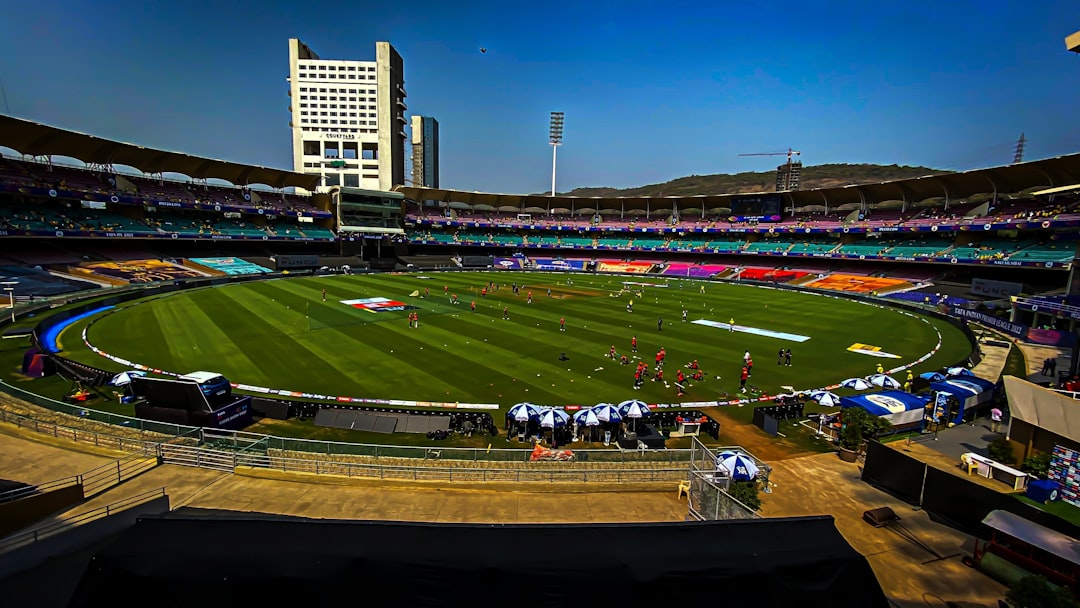
Cricket festivals are no longer just community celebrations. In the age of tighter council budgets, rising expectations around public accountability, and intense competition between towns for visitor spend, a well-run cricket event has to prove its value in hard numbers. That means showing not just who attended, but where they came from, how long they stayed, what else they spent money on, and whether the event helped the local economy in ways that justify future investment. This is where movement intelligence changes the game, moving cricket festivals from anecdote-driven optimism to evidence-based planning.
The strongest lesson from modern sports intelligence is simple: if you can measure movement, you can measure value more credibly. That approach mirrors the logic behind ActiveXchange-style insights, where sport and recreation leaders move from gut feel to evidence-based decision-making, and where tourism managers can better determine the value of non-ticketed events. For cricket organisers, that unlocks a practical pathway to council funding, tourism partnerships, sponsor confidence, and long-term growth. If you are also thinking about matchday operations and audience communication, our guide on plugging the communication gap at live events is a useful companion read.
In this definitive guide, we will break down how event tourism works in cricket, what movement intelligence actually captures, how to translate footfall into economic impact, and how organisers can build a robust business case that councils and destination bodies can trust. We will also connect the data story to practical planning, from infrastructure and staffing to sponsorship and future growth. For organisers building a broader community platform, the ideas here pair well with low-tech ticketing and big community impact and with venue partnership strategy.
Why Cricket Festivals Need an Economic Narrative, Not Just a Crowd Count
Attendance is only the starting point
Traditional event reporting often stops at gate numbers. That is useful, but it is far from enough when public money, sponsorships, and local business outcomes are at stake. Councils want to know whether a festival attracted out-of-area visitors, extended overnight stays, activated the precinct, and delivered measurable spend into cafes, accommodation, transport, and retail. A 6,000-person crowd could mean very different economic outcomes depending on whether those attendees were local residents or regional visitors staying for two nights.
Movement intelligence adds that missing layer by showing origin patterns, dwell times, repeat visitation, and cross-destination activity. In practical terms, it can reveal whether cricket festival attendees also visited nearby dining precincts, attractions, or the waterfront after the match. That matters because event tourism is rarely a single-venue story; it is a network story. When councils see that cricket is spreading spend across a local economy, it becomes easier to justify funding and infrastructure support.
Non-ticketed cricket events often have the weakest evidence base
Many community cricket festivals, junior carnivals, multicultural celebration days, and season-launch events are free or low-cost. That creates a documentation problem: without ticketing data, organisers struggle to prove scale and visitor mix. Yet these are exactly the events that can have strong local economic value because they often attract families, regional clubs, volunteers, and repeat visitors who spend across several hours or days. The ActiveXchange case study context is important here because it specifically notes the ability to better determine tourism values of non-ticketed events like Craft Revival.
For cricket festivals, this matters enormously. A free family event may not produce gate revenue, but it may generate accommodation bookings, food and beverage spend, and additional visitation to the host precinct. With the right movement intelligence and forecast model, organisers can convert that invisible value into a persuasive funding case. For a deeper understanding of how smart data turns uncertainty into strategy, see reading large capital flows as a signal, which offers a useful lens for interpreting big-but-noisy datasets.
Public funders need evidence, not enthusiasm
Funding bodies are under pressure to demonstrate return on investment. Whether the money comes from councils, tourism agencies, regional development grants, or community sport programs, decision-makers increasingly expect measurable outcomes. The strongest cricket festival applications today do more than describe atmosphere or community pride; they quantify economic impact, participation outcomes, inclusion benefits, and long-term destination branding. That is why evidence-based planning has become a competitive advantage rather than a nice-to-have.
Organisers that can show repeatable methods, reliable baselines, and transparent assumptions will always have an edge. A council can support a festival more confidently when it sees a credible model that tracks visitor movement, spend proxy indicators, and likely multipliers. This is also where the discipline of data quality attribution becomes important, because every economic estimate is only as strong as the data underpinning it.
What Movement Intelligence Actually Measures at a Cricket Festival
Origin, catchment and visitor mix
Movement intelligence begins with understanding where people came from. That means identifying how many attendees are local, how many are from the wider region, and how many travelled from farther afield for the event. For cricket festivals, this can show whether the event is acting as a neighbourhood activation or a tourism product. If the data reveals strong overnight visitor behaviour, the economic case becomes much stronger because tourism value usually scales with distance travelled and time spent in the destination.
This category of insight also helps organisers tailor the event itself. If a festival draws families from surrounding districts, then parking, shade, food offerings, and family programming become more important. If there is a high proportion of visitors from metro areas, then transport links, wayfinding, and sponsor activations may need to be adjusted. To understand how different audience groups respond to content and journeys, it can be helpful to compare with content design for older adults, especially where family decision-makers are central to attendance.
Dwell time, movement paths and precinct activation
One of the most valuable measures in movement intelligence is dwell time. It tells you how long attendees stayed in and around the festival zone, which is often a stronger economic signal than raw attendance. A crowd that arrives for one innings and leaves immediately has a different spend profile from one that stays for a full day, visits food trucks, explores local shops, and returns later for community entertainment. When local businesses want evidence that a cricket festival benefits them, dwell time is often the bridge between sports data and commercial reality.
Movement paths help identify where people go after they leave the main venue. Did they cluster in the town centre? Did they move to a beach, museum, brewery, or dining precinct? Did they circulate within a five-minute walk or disperse immediately? These are the kinds of patterns that event tourism agencies use to understand whether an event has expanded beyond the boundary of the ground and into the local economy. For organisers managing the live environment, the logic is similar to proactive feed management for high-demand events: the better your operational visibility, the better your visitor experience and your outcomes.
Repeat visitation and season-long momentum
Cricket festivals should not be measured in isolation. Movement intelligence can identify whether the same visitors return for multiple sessions, whether they attend across a festival weekend, or whether they come back for future fixtures and events. That matters because the economic value of a successful cricket festival often extends far beyond one weekend. It can seed future visitation, deepen club loyalty, and support a town’s reputation as a destination for sport-led tourism.
This longer horizon aligns with the broader ActiveXchange-style value proposition: better understanding of participation trends, community outcomes, and infrastructure roles in relation to a wider network. For event organisers, that means using data not only to defend an event this year, but to plan for the next three years. That is exactly the kind of iterative thinking found in scaling from pilots to enterprise-wide practice, except here the “enterprise” is your festival ecosystem.
From Footfall to Economic Impact: The Forecasting Model That Councils Want
Step 1: Establish a credible attendance baseline
The first task is not forecasting; it is counting accurately. Organisers should triangulate attendance using multiple methods such as manual counts, access scans, movement data, park-and-ride totals, and precinct monitoring. A single source is rarely enough, especially when cricket festivals have open boundaries, multiple attractions, or free entry. A robust baseline prevents inflated claims and makes the eventual economic estimate more trustworthy.
Once the baseline is set, segment it by day, session, and visitor type. This allows you to distinguish between peak crowd numbers and sustained economic contribution. Councils often care less about the biggest spike and more about whether the event drove consistent visitation, distributed spend across the precinct, and produced benefits that justify public expenditure. For organisers dealing with complex operational realities, the thinking is similar to ops metrics for high-pressure environments: measure what actually drives performance, not just what looks impressive.
Step 2: Translate visitor origin into spend scenarios
Not all attendees spend equally. Local residents may spend on food, parking, and entertainment, while regional and interstate visitors can generate additional accommodation, fuel, retail, and pre/post-event tourism spend. The forecasting model should therefore apply different spend assumptions to different visitor categories. The best practice is to use conservative, moderate, and high scenarios rather than a single headline figure, so that stakeholders can see the range of likely outcomes.
For example, a one-day family cricket festival may generate limited hotel nights but strong food and beverage spend and strong secondary visitation to the town centre. A weekend cricket carnival, by contrast, may produce accommodation demand, longer stay lengths, and higher spend across multiple sectors. The economic case becomes stronger if movement intelligence confirms that visitors actually moved into the broader destination. For comparison, note how consumer decision-making is often shaped by price, timing, and flexibility in guides like timing trips around peak availability and fare decisions and travel trade-offs.
Step 3: Add multiplier effects carefully
Economic impact discussions often become inflated when multipliers are used carelessly. A good forecast distinguishes between direct, indirect, and induced effects, and avoids double counting. Direct impact is the immediate money spent by visitors at the event and in the destination. Indirect impact comes from supplier activity and business inputs. Induced impact reflects wage-driven household spending. Councils will respect a model more if it is conservative, transparent, and clearly labeled.
A practical approach is to present the direct spend as the core outcome and then show a second, clearly separated total that incorporates a reasonable local multiplier. That keeps the narrative credible. It is also worth acknowledging uncertainty, especially when local economic conditions are soft or household spending is under pressure. The cautionary tone in the FCC outlook on modest sales growth and weak underlying demand is a reminder that event forecasts should stay grounded in current consumer behavior rather than assume unlimited capacity.
Step 4: Convert qualitative value into policy value
Not every benefit of a cricket festival is captured in spending figures. Some events improve local pride, community cohesion, youth participation, and the visibility of underrepresented groups. These benefits still matter in funding decisions, especially where councils use social outcomes as part of their assessment criteria. Movement intelligence can help here too by showing access patterns, family participation, and cross-community reach.
That is why the strongest funding submissions pair economic impact with community value. They show that the event is not only good for business but also aligned with strategic outcomes around health, inclusion, and place-making. For broader event planning lessons, there is value in reviewing how communities adapt when big infrastructure arrives, because major sport assets and temporary festivals both reshape local behaviour and expectations.
How Cricket Festivals Unlock Funding with Evidence-Based Planning
Building a council-ready case
Council officers and elected members usually want three things: proof of demand, proof of benefit, and confidence that the event can be delivered responsibly. A movement-intelligence report can provide all three. Demand is shown through visitor mix and mobility data. Benefit is shown through estimated spend, dwell time, and precinct activation. Delivery confidence is shown through crowd management insights, arrival patterns, and operational learnings that improve next year’s plan.
When the case is written well, the festival stops being framed as a one-off request for subsidy and starts being seen as a platform investment. This is especially powerful in regional towns where sports tourism can help smooth seasonal volatility. If your local business stakeholders need help understanding how visitor flows translate into commercial value, a useful adjacent read is competitive intelligence for fleet planning, which shows how movement and demand data can shape asset deployment.
Turning tourism value into co-investment
Tourism organisations are more likely to co-invest when they can see evidence that an event attracts out-of-area visitors and supports overnight stays. With movement intelligence, organisers can map event catchment, estimate visitor dispersal into accommodation zones, and show post-event visitation to attractions. That is highly relevant for tourism value because it links the cricket festival to the broader destination economy rather than treating it as an isolated sports asset.
One practical strategy is to structure the funding pitch around shared outcomes: increased visitor nights, support for local operators, and repeat visitation in future seasons. This makes the event attractive not only to councils but also to regional tourism bodies and chambers of commerce. If sponsor and partner activation is part of the plan, consider how venue partnership negotiations and event marketing performance can strengthen the commercial case.
Using data to protect future funding
Funding is rarely won once and then guaranteed forever. Councils and grant bodies want to see improvement over time. Movement intelligence allows organisers to benchmark year-on-year outcomes, identify which activation zones worked, and show whether the event generated more visitation, longer stays, or a broader visitor base in the following year. That makes future funding conversations less adversarial and more strategic.
A festival that can prove growth in visitor quality, not just raw attendance, is much better positioned to secure multi-year support. This is particularly relevant where councils are being careful with discretionary spending and need hard evidence of community return. The logic is similar to the approach in volatile-beat coverage: if conditions change quickly, your reporting and decision-making framework has to stay responsive and factual.
What Good Movement Intelligence Looks Like in Practice
Use multiple data layers, not one dashboard
The best cricket festival analysis combines movement intelligence with event operations, tourism data, local business feedback, and qualitative stakeholder interviews. A single dashboard can be useful, but it should not become the whole story. Councils and sponsors are more likely to trust a report that triangulates sources and explains its assumptions. That is especially true when the event is free to attend and the economic story must be inferred from visitor behavior rather than ticketing records.
A practical reporting stack might include anonymized mobility data, accommodation occupancy trends, precinct business sentiment, event staffing observations, and post-event surveys. Together, these form a much richer picture than gate counts alone. This is where the discipline of modern analytics resembles data governance in marketing: you need strong methodology, clear accountability, and a transparent chain from data to decision.
Look for the “after the match” economy
One of the easiest mistakes is to focus only on the live match window. But in many towns, the economic benefit happens before the first ball and after the last wicket. Visitors may arrive early for breakfast, shop before the event, stay late for dinner, or return the next day for a second attraction. Movement intelligence can prove this extended economic footprint and show whether the event is truly energising the destination.
For example, a Saturday cricket festival might generate a surge in morning café traffic, midday food-court demand, and post-event dining bookings. If enough visitors stay overnight, Sunday tourism activity can add a second layer of spend. That is the kind of detail that gets noticed by both councils and destination marketers because it turns cricket into a place-based economic driver rather than a one-off leisure activity. This also echoes the thinking in successful pop-up experiences, where the surrounding experience drives the real commercial outcome.
Benchmark against similar events and seasons
Economic impact claims get stronger when they are benchmarked. Comparing a cricket festival to prior editions, nearby events, or similar regional activations helps separate genuine growth from normal volatility. A good benchmark set might include footfall, visitor origin, dwell time, accommodation usage, spend proxies, and local business satisfaction. Over time, these metrics help organisers identify which levers matter most for growth.
Benchmarking is also crucial because economic conditions shift. A festival may attract more visitors but lower average spend if households are being cautious. Or it may maintain spend per visitor while gaining higher attendance due to better transport access or stronger promotion. That kind of analysis mirrors the logic of combining technicals and fundamentals, where the best decisions come from reading both signal and context.
Operational Choices That Improve Economic Impact
Site layout, amenities and dispersal planning
Economic value is not only measured after the event; it is designed into the event. A well-planned layout can encourage movement into adjacent precincts, keep people on site longer, and improve the likelihood of secondary spend. Food zones, family spaces, shade, seating, entertainment, and clear wayfinding all influence visitor dwell time and local activation. If the goal is tourism value, then the festival footprint should be planned as part of the town’s broader visitor economy, not just the playing field.
Small design choices matter more than many organisers realise. Better placement of entry points, shuttle stops, and community activations can shift visitor flows toward local businesses. That is why some of the most valuable feedback from ActiveXchange-style work is operational rather than purely analytical: it helps organisers make late design modifications that improve customer experience and financial performance. For a practical example of how layout and delivery detail affect outcomes, see workflow quality and process fixing, which translates surprisingly well to live-event logistics.
Communications that direct spend into the local economy
Event organisers often underuse their own communication channels. Strategic signage, social posts, schedule emails, and on-ground announcements can encourage visitors to explore nearby shops, dining, and attractions. This is not just marketing; it is economic development. If the festival wants to maximize local value, then messages should point visitors toward the surrounding town, not just the boundary of the venue.
There is also an opportunity to make the festival feel like a regional showcase. Highlight local produce, regional crafts, family attractions, and official merchandise in ways that extend spend beyond the ticket or gate. The best execution borrows from high-retention audience strategies in other sectors, such as high-trust live series design, where communication builds confidence and participation.
Inclusivity expands the economic base
Cricket festivals with broader community appeal usually generate stronger local value. Events that welcome women and girls, multicultural communities, families, senior spectators, and beginner participants attract wider visitation patterns and more diverse spend. Inclusion is not just a social good; it widens the audience funnel and can increase the event’s overall commercial resilience.
This is one reason councils often respond positively to events that show community reach alongside visitor spend. A well-rounded festival becomes easier to defend because it serves multiple public priorities at once. For a parallel on how sport data can support equity and inclusion outcomes, see the ActiveXchange success-story theme of using data to drive gender equality and inclusion across clubs and programs.
A Practical Comparison of Measurement Approaches
The table below compares common methods used to measure cricket festival value. In practice, the strongest reports use a blend of these methods rather than relying on only one. The key is to match the method to the funding question: tourism impact, local economic spend, community value, or future growth potential.
| Method | What it measures | Strength | Limitation | Best use case |
|---|---|---|---|---|
| Gate counts / manual tallies | Total attendance | Simple and fast | No origin or dwell insight | Baseline crowd volume |
| Ticketing data | Paid attendance and purchase timing | Strong transaction record | Misses free events and pass-through visitors | Ticketed cricket carnivals |
| Movement intelligence | Visitor origin, dwell time, flow patterns | Best for tourism value and precinct impact | Requires careful interpretation and privacy-safe methods | Event tourism and funding cases |
| Visitor surveys | Spend, satisfaction, trip purpose | Direct self-reported economic data | Sample bias and recall error | Economic impact validation |
| Business feedback | Trader sentiment and observed uplift | Ground-level commercial insight | Subjective and often inconsistent | Local economy storytelling |
| Accommodation data | Occupancy and length of stay | Excellent tourism signal | May not capture day visitors | Regional event forecasting |
How to Build a Funding-Ready Cricket Festival Report
Tell the story in the right order
A strong report starts with the question, not the data. What did the council or sponsor want to know? Tourism value? Local business impact? Community participation? Future growth potential? Once the question is clear, the report should answer it with a short executive summary, a transparent methodology, and clear findings supported by visuals and local examples. This structure makes the report usable for grant applications, council briefings, media releases, and sponsor decks.
Remember that the audience is usually time-poor. A funding body may only read the first two pages, so the opening pages must do real work. That means leading with the strongest finding, not the background. If the festival brought in more out-of-area visitors than expected, say so immediately and explain why it matters. If the local economy benefited through extended dwell time, quantify that before diving into technical detail.
Make assumptions visible and conservative
Trust is everything in economic impact work. If a report uses visitor spend assumptions, multiplier effects, or region-wide forecasts, those assumptions need to be visible and defensible. Conservative modeling generally performs better in public-sector settings because it reduces the risk of accusations of overclaiming. The strongest reports are not those that promise the biggest number, but those that can survive scrutiny.
Where possible, include low, medium, and high scenarios. Explain which metrics are observed, which are inferred, and which are modeled. This is where a clear data ethics approach matters, much like the transparency expected in safe-answer patterns for AI systems, because event economics also needs reliable guardrails.
Use visuals that councils and businesses can act on
Maps, flow diagrams, catchment overlays, and day-by-day visitation charts are more persuasive than dense tables alone. A councillor should be able to see at a glance that the festival pulled visitors from outside the immediate district or that dwell time extended into the nearby retail strip. Business owners want to know which trading periods benefited most and which precincts were activated. Visual reporting makes the opportunity tangible.
Done well, these visuals can also support future planning. They can inform where to place shuttle loops, how to adjust trading hours, where to create new sponsor activations, and whether a second-day program could grow spend. This turns the report from a retrospective document into a planning tool, which is where the real value lies.
Common Mistakes to Avoid
Confusing activity with economic impact
Not every busy event is a strong economic event. High attendance can still mean low local spend if visitors are mostly local residents making short trips. Likewise, a smaller crowd of out-of-town visitors may generate more value than a larger local audience. That is why origin and dwell time matter so much in cricket festival reporting.
Organisers should avoid headlines that exaggerate impact based on footfall alone. Instead, they should explain the relationship between attendance, tourism value, and local economy contribution. This makes the case more durable and less vulnerable to criticism. For a broader reminder on how noisy signals can mislead decision-makers, see why memes can become misinformation, which is a useful analogy for event hype without evidence.
Ignoring the local business voice
Movement data is powerful, but qualitative business feedback matters too. Traders can tell you which hours were busiest, what products sold, and whether visitors were browsing or simply passing through. Their perspective helps validate the movement story and add texture that data alone cannot provide. Councils often appreciate this because it shows that the report reflects the lived commercial reality of the destination.
It is especially useful to collect business feedback consistently before and after the event, not just once. A repeatable survey or interview process builds credibility over time. Combined with movement intelligence, it gives a fuller view of event tourism impact and local economic contribution.
Failing to plan for the next iteration
The best festivals use measurement to improve. If the report shows that visitors clustered heavily in one zone but barely reached a nearby retail strip, that is a planning signal. If families stayed longer when more seating and shade were provided, that is an investment signal. If out-of-town visitors increased when the festival was paired with a regional attraction campaign, that is a marketing signal.
The point is not simply to prove success, but to build a roadmap. In that sense, measurement is a growth tool. It helps the cricket festival move from an annual event to a place-based tourism asset with a clearer business model.
FAQ
What is movement intelligence in the context of cricket festivals?
Movement intelligence is the analysis of anonymized visitor mobility patterns, including origin, travel paths, dwell time, repeat visitation, and precinct flow. For cricket festivals, it helps organisers understand who attended, how far they travelled, how long they stayed, and whether they contributed to the wider local economy. It is especially useful for free or non-ticketed events where traditional attendance records are limited.
How does movement intelligence help unlock council funding?
It gives councils evidence that an event delivered tourism value, local business uplift, and broader community benefit. Instead of relying on anecdotal claims, organisers can present data on visitor origin, spend scenarios, and precinct activation. That makes funding decisions easier because the event can be assessed against measurable outcomes rather than just sentiment.
Can a free cricket festival still have measurable economic impact?
Yes. Free events often have significant visitor movement, and that movement can translate into spend across food, retail, accommodation, transport, and local attractions. Movement intelligence is especially valuable here because it can reveal economic contribution even when there is no ticketing data. Many councils are most interested in exactly this kind of evidence.
What metrics should be included in an economic impact report?
At minimum, a strong report should include attendance estimates, visitor origin mix, dwell time, repeat visitation, accommodation usage, local business feedback, and a clear explanation of direct spend assumptions. Where appropriate, it should also separate direct, indirect, and induced impact. The report should be transparent about methodology and conservative about multipliers.
How often should cricket festivals measure economic impact?
Ideally, every year. Year-on-year measurement allows organisers to identify growth, test improvements, and prove that investment is producing better outcomes over time. It also helps build a benchmark dataset that can strengthen future funding applications and sponsorship pitches.
Conclusion: Turn Cricket Festivals into Measurable Economic Assets
Cricket festivals can be far more than community celebrations. With movement intelligence, they become measurable engines of event tourism, local spend, and place-based value. That matters because councils, tourism bodies, and sponsors increasingly want evidence they can trust. When organisers can show who attended, where they came from, how long they stayed, and how the event spread value across the local economy, they move from storytelling to proof.
The bigger strategic opportunity is that measurement improves planning. Once you know which visitor segments matter most, which precincts activate best, and which event features increase dwell time, you can design a stronger festival next time. That is the real promise of evidence-based planning: not just justification, but growth. For deeper inspiration on how data-led strategy drives sporting outcomes, revisit these success stories from ActiveXchange-style analysis, and if you are building out a broader sports-business ecosystem, explore operational resilience, matchday communications, and high-demand event management as part of the same strategic toolkit.
Related Reading
- Inside the Gaming Industry: Exclusive Discounts for Gamers - Useful for understanding promotional mechanics and community conversion at scale.
- How to Turn Executive Interviews Into a High-Trust Live Series - A strong reference for building credibility through live storytelling.
- The Future of Pay-Per-Click: Insights from Agentic AI for Event Marketers - Helps marketers sharpen acquisition tactics for future festival audiences.
- How to Negotiate Venue Partnerships If You’re Not Live Nation - Practical advice for partnership strategy and negotiation leverage.
- Why AI-Driven Security Systems Need a Human Touch - A useful reminder that live-event systems still need human judgment.