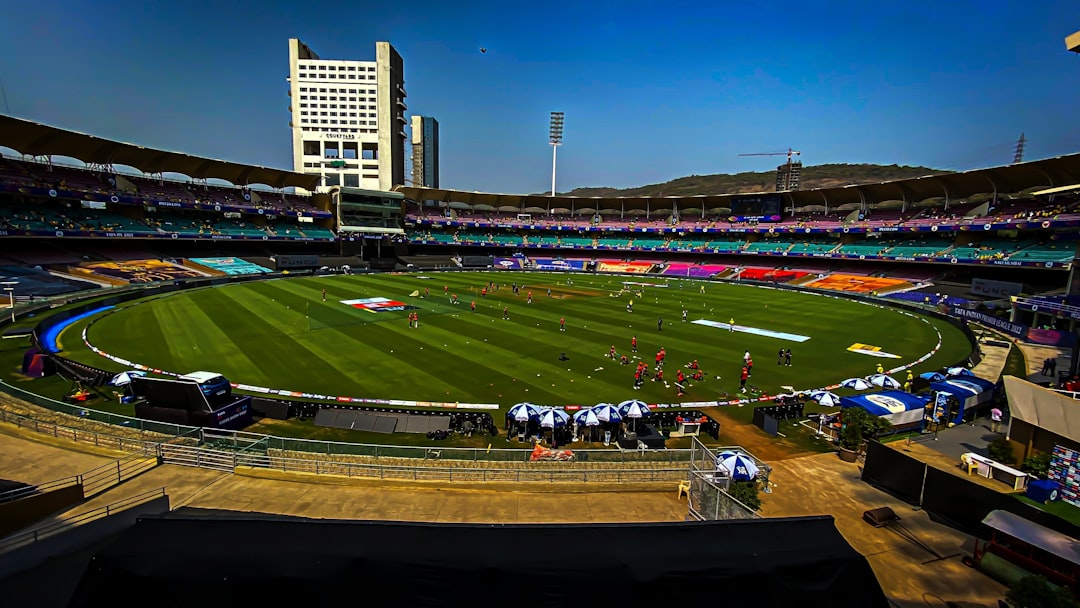
Technology is no longer a backstage tool in cricket — it is the stage. From ball-tracking that shapes umpire decisions to predictive models that influence who bowls the 45th over in an ODI, technological innovation is rewriting the playbook for coaches, captains and analysts. This deep-dive examines how data analytics, AR (augmented reality), wearables, and AI-driven platforms are reshaping strategies in international cricket — with actionable guidance for teams, analysts and fans who want to read the game differently.
1. Introduction: Why technology matters in modern ODI strategy
1.1 The shift from intuition to evidence
Cricket once leaned heavily on the instincts of captains and coaches. Today, the margin between a strategic masterstroke and a tactical error is often measured in gigabytes. Data analytics transforms raw events — every ball, foot placement, bat angle — into predictive insight. The teams that combine domain expertise with robust analytics pipelines consistently outperform peers in narrow, high-leverage moments of ODI matches.
1.2 Fans, engagement and the digital ecosystem
Technology doesn't only serve teams. Fans experience matches through layers of data visualization, AR overlays and interactive content that enhance understanding and emotional connection. For perspectives on how fan engagement is being redesigned, see our review of the evolving landscape of sports fan engagement, which parallels innovations being introduced in cricket stadia and streaming platforms.
1.3 Cross-industry lessons
Sports teams borrow best practices from industries tackling complex systems — automotive design thinking, live entertainment engagement, and avatar-based digital identities offer useful analogies. For example, design thinking principles can guide productized analytics for squads, as outlined in design-thinking in automotive, where iterative user testing drives better solutions.
2. Data analytics: The backbone of modern game strategy
2.1 What advanced analytics provide
Advanced analytics convert ball-by-ball telemetry into actionable recommendations: optimal batting orders by phase, bowler-batsman matchups, field placement probabilities and risk-adjusted chase plans. ODI teams use these outputs to adjust strategies dynamically — deciding whether to chase aggressively after a wicket or consolidate with an anchor, for example.
2.2 Tools and pipelines used by teams
Typical pipelines ingest tracking data (Hawk-Eye), wearable sensors, video feed and historical databases. Machine learning models score match states and simulate thousands of possible outcomes. The organizations that build maintainable pipelines borrow lessons from tech transformation across sectors — like the role of AI in enterprise growth discussed in AI in economic growth.
2.3 From insight to in-game decisions
Analytics only help if actionable: output must map to clear decisions for captains and coaches. That requires dashboards, predictive odds and playbooks. Teams are learning to trust analytics for strategic substitution, powerplay aggression profiles and death-over plans — turning numbers into discrete instructions for players.
3. Ball-tracking, DRS and video technology — precision that changes umpiring and tactics
3.1 Ball-tracking and its strategic ripple effects
Hawk-Eye and similar systems have given cricket unprecedented precision for LBW calls and trajectory analysis. But the tactical impact extends beyond umpiring: bowlers adjust seam and wrist positions based on recorded trajectories; teams analyze common dismissal corridors to set fields proactively in ODIs.
3.2 Video analytics and scouting
High-frame-rate video coupled with automated tagging transforms scouting. Instead of manual clip hunting, analysts query searchable event libraries to identify recurring weaknesses in opposition players: a faint inside edge to short deliveries, or vulnerability to two-paced off-breaks. This accelerates opponent profiling ahead of series and one-off ODIs.
3.3 How DRS alters captaincy psychology
Decision Review System (DRS) availability changes risk calculus. Captains with analytics support know when the underlying probability favors a review; that statistical advice often saves reviews for high-impact moments. Teams now quantify 'review value' in different match contexts, blending analytics with captain instincts.
4. Wearables, IoT and player performance monitoring
4.1 What wearables measure
Modern wearables capture workload (accelerometry), heart-rate variability, sleep quality and biomechanical markers. These metrics feed injury-risk models and help manage rotation in ODI-heavy windows. For example, a bowler whose shoulder load trends up may shift to a managed workload plan to avoid a stress injury.
4.2 IoT in training facilities
Small Internet-of-Things devices — instrumented cricket bats, smart nets, and trackable balls — generate high-resolution practice datasets. Teams use them to measure bat speed in the nets, bowling run-up consistency, and fielding reaction time. These micro-metrics inform individualized training programs.
4.3 Integrating wearables with coaching workflows
Analytics teams must ensure data is translated into coach-friendly interventions: recovery plans, targeted drills and travel schedules. Cross-discipline approaches, including lessons from content-driven education platforms like content creation in modern education, help teams build repeatable, scalable learning programs for players.
5. Augmented Reality (AR) and immersive interfaces: changing how matches are coached and consumed
5.1 AR for coaching and rehearsal
AR overlays allow players to rehearse match scenarios with projected batsmen or bowlers in simulated environments. A batter can face an AR projection of a spinner bowling a squad-specific variation, rehearsing decision thresholds in a controlled setting.
5.2 AR in broadcast and fan experience
Broadcasters layer AR overlays with real-time probabilities, strike-rate heatmaps and projected chase lines. These enrichments help casual fans understand complex strategies, making ODIs more accessible and increasing viewing retention. Comparable live-engagement strategies are explored in how live theater creates anticipation and engagement.
5.3 Avatars and the bridging of physical and digital experiences
Next-gen fan experiences use avatars and digital doubles to bridge stadium and home-viewing. For an in-depth take on these hybrid experiences, see the role of avatars in next-gen live events, which has direct implications for cricket fan identity and monetization.
6. AI, predictive models and tactical decision-making
6.1 Predictive tactics: what models forecast
AI models forecast match outcomes conditional on state: after 30 overs with two wickets down, what's the win probability for the chasing side? Such models generate 'decision trees' for captains — whether to take the first powerplay or hold back an extra bowler. These predictions are probabilistic, not prescriptive, but they reduce uncertainty in the ODI sandbox.
6.2 Reinforcement learning and strategy simulation
Teams test strategies using reinforcement learning agents that simulate millions of innings, discovering counterintuitive tactics (e.g., opening with a spinner in specific overseas ODIs). Clubs in other sectors use similar simulation approaches to stress-test strategies, as discussed in cross-industry AI reviews like AI in economic growth.
6.3 Human-in-the-loop: blending AI with coaching judgment
Even the best models require human oversight. Coaches embed domain constraints and ethical considerations into model outputs, ensuring AI recommendations respect player workload limits and strategic culture. Industry guidance on AI compliance is relevant here — see AI compliance frameworks for structured governance approaches.
7. Data governance, privacy, and regulatory considerations
7.1 Player data privacy and rights
Player biometric and performance data is highly personal. Teams must implement clear privacy policies, consent protocols and retention limits. Lessons from event-app privacy priorities highlight user expectations around transparency and control; see user privacy priorities in event apps for parallels.
7.2 Data tracking regulations and compliance
Data-tracking laws and evolving regulation require IT leaders to stay current. Understanding the regulatory landscape — how tracking consent, retention and anonymization must be handled — is critical. For a technical brief on the regulatory context, consult data-tracking regulations.
7.3 Building compliant analytics pipelines
Compliant pipelines combine anonymization, role-based access, and documented data lineage. This enables analytics teams to answer high-value questions without infringing on player rights — a balance similar to regulatory frameworks in other AI-driven fields, covered in AI compliance explorations.
8. Case studies: How technology changed ODI match outcomes
8.1 Example: chase planning and dynamic simulations
In multiple ODIs, teams entering the chase use real-time win-probability models to structure aggression. Rather than following a rigid pro-rata rate, teams target phases informed by bowler-wicket probabilities and powerplay success metrics. These models impact who faces a given over and when to accelerate.
8.2 Example: death-over bowling plans informed by analytics
Analytics teams identify the most effective variations for specific batsmen in death overs. This goes beyond intuition: field maps, past over outcomes and predicted contact points drive which seam or wrist variation a captain will call for when protecting a small target in the 48th over.
8.3 Example: injury prevention changing selection
Wearable-derived workload models have led to proactive rotation in ODI squads mid-series. Instead of reacting to injury, teams forecast heightened risk and rest bowlers between matches — a direct payoff in tournament longevity and consistent performance.
9. Implementing technology at scale for domestic and emerging teams
9.1 Building a phased adoption plan
Implementation must be phased: start with data capture (basic ball-by-ball and video), then analytics for coach workflows, and finally AR/wearables. Small-budget teams can learn from low-cost innovations in other domains — practical gadget guides show how to prioritize spend, similar to consumer tech advice in tech-savvy camping gadget guides.
9.2 Training coaches and analysts
Upskilling is essential. Teams should run hands-on labs that teach coaches how to interpret model outputs and convert them into practice drills. Cross-disciplinary approaches from education and creative collaboration provide helpful frameworks — read about content creation's role in education at the role of content creation.
9.3 Partnering with the private sector
Many domestic programs partner with startups and sponsors for technology access. Brand-building lessons from organizational M&A and marketing can help structure these partnerships; for sponsorship and brand lessons see brand building case studies.
10. Roadmap: What coaches and analysts must build now
10.1 Prioritize data hygiene and instrumentation
Before building complex models, ensure the data is clean, timestamped and consistent. Instrument the nets, match feeds and training sessions so datasets are comparable across players and seasons. The same focus on quality infrastructure appears in industries optimizing for recognition and design, as explored in designing for recognition.
10.2 Create coach-focused deliverables
Analytic outputs must be translated to checklists, drills and call-sheets. Treat your analytics service like a content product: iterate based on coach feedback, much like creators collaborate to refine ideas — see when creators collaborate.
10.3 Design fan-facing products to grow your club's footprint
Monetize fan engagement with informed, AR-driven experiences and educational content that increases retention. Strategies for monetizing creative work can be adapted for clubs exploring digital revenue, borrowing principles from economics of art monetization.
Pro Tip: Start with one measurable problem (e.g., reducing wicket losses in the first 10 overs). Collect baseline data for four series, test interventions, then scale. Small, iterative wins build credibility for bigger technology investments.
11. Comparison table: How different technologies stack up for ODI strategy
| Technology | Primary use | Data inputs | Strategic impact on ODIs | Implementation cost |
|---|---|---|---|---|
| Data Analytics / ML | Win probability, matchup models | Ball-by-ball, historical, tracking | Better in-game decisions, lineup optimization | Medium–High |
| Ball-tracking & DRS | Umpire accuracy, trajectory analysis | Multiple camera feeds, radar | Reduced umpire error, tactical field setting | High (infrastructure) |
| Wearables & IoT | Workload, biomechanics | Accelerometer, HRV, GPS | Injury prevention, rotation planning | Medium |
| Augmented Reality (AR) | Immersive coaching, broadcast overlays | 3D models, live telemetry | Faster rehearsal, enhanced fan understanding | Medium |
| AI Simulation / RL | Strategy discovery, stress testing | Match state histories, reward functions | Uncovers non-intuitive tactics, scenario planning | High |
12. Conclusion: The strategic frontier and how to win it
Technology in cricket is no fad; it is the structural shift defining how modern ODI matches are planned and contested. Teams that win will be those that integrate rigorous analytics with pragmatic coaching, respect data privacy, and design fan products that scale the sport's economic engine. To build this future, organizations should take a roadmap approach: 1) instrument and clean data, 2) deliver coach-centric analytics, 3) adopt AR and wearables where ROI is clear, and 4) establish robust governance.
For teams and organisers interested in the fan and commercial side of this evolution, there are useful parallels in live entertainment and fan engagement strategies — learn more from our coverage of live-theater engagement and hybrid fan experiences at avatars in next-gen events.
Frequently asked questions (FAQ)
Q1: How immediate are the performance gains from analytics in ODI cricket?
A1: Gains are typically incremental. Teams can expect improved decision-making within one season if data capture and coach adoption are prioritized. The most immediate wins are better match-planning and targeted practice drills.
Q2: Are AR and wearables necessary for all teams?
A2: No. They are high-value when aligned with a program goal (injury prevention, rehearsal realism, fan monetization). Smaller teams should phase adoption: start with analytics and video, then layer wearables and AR.
Q3: How do teams handle player privacy?
A3: Teams implement consent frameworks, anonymize datasets for broader research and limit access to sensitive telemetry. Best practices follow general event-app privacy and data-tracking regulations; see industry discussions such as user privacy priorities and data-tracking regulations.
Q4: Can small-budget domestic teams compete technologically?
A4: Yes. Phased, smart investments — starting with video tagging and coach-level dashboards — yield most early value. Partnerships with universities, start-ups and sponsors help offset costs; lessons in monetization are covered in creative monetization.
Q5: What should a captain expect from a tech team during an ODI?
A5: Concise, prioritized inputs. Captains should receive high-confidence recommendations (e.g., review now: 78% chance successful) and clear tactical notes — not raw data dumps. Training for captain-analyst workflows is essential.
Related Reading
- Bridging Physical and Digital - How avatars and digital doubles are changing live event experiences.
- The Evolving Landscape of Sports Fan Engagement - Fan engagement trends that inform cricket broadcast strategies.
- The Power of Live Theater - Lessons in anticipation and retention for live sports broadcasts.
- AI in Economic Growth - Broader context on AI impact for organizations and IT resilience.
- Exploring Compliance in AI - A primer on governance for AI systems.