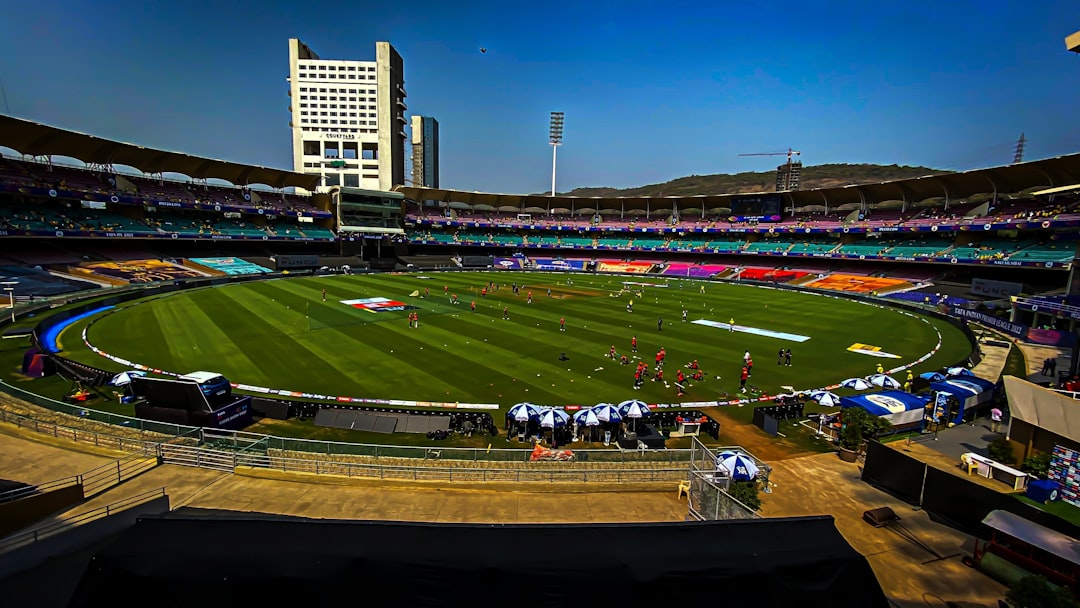
Cricket cities increasingly know a simple truth: the biggest economic opportunity around a match is not always inside the stadium. It is in the fan zones, live sites, city walks, food trails, pop-up performances, sponsor activations, and weekend-long community programming that turn a single fixture into a destination event. That is why event leaders are now borrowing from the ActiveXchange success stories playbook: if an event is non-ticketed, you do not measure it like a gate-based spectacle. You measure movement, dwell time, catchment, and spend patterns to prove tourism value, justify municipal support, and make the case for bigger footprints next year.
This matters because cricket fan festivals and fringe events often create value that traditional ticketing cannot see. A fan zone may be free entry, but it can still drive hotel nights, local transport use, dining spend, family entertainment, and repeat visitation across a whole district. If city partners only see the lack of ticket revenue, they miss the actual commercial story. For a broader view of how event ecosystems influence visibility and monetization, the lens used in monetizing immersive fan traditions and content marketing secrets from MMA is useful: the experience is the product, and the product can be measured.
1) Why non-ticketed cricket events need a different value model
Tickets measure access, not impact
A ticket tells you who bought a seat. It does not tell you who traveled into the city for the match, spent money at nearby restaurants, joined a free fan march, or came back the next day with family. That is the core limitation of ticket-based measurement for fan festivals and fringe events. Municipal decision-makers care less about admission counts than about whether an event activates local businesses, fills public spaces, and extends the visitor economy beyond the stadium perimeter.
This is where non-ticketed event analysis becomes essential. In the same way publishers use ROI and growth-path thinking for martech alternatives, event operators should compare measurement methods on the basis of decision usefulness. A spreadsheet full of attendance estimates is not enough. What cities need is evidence that a fan festival created measurable tourism value, opened up new districts, and supported a rationale for municipal support.
Tourism value is a multi-layered outcome
Tourism value is not only direct spend. It includes visitor nights, venue spillover, mobility patterns, secondary visitation, and the ability to shift a city’s image into a live, fan-friendly destination. A cricket weekend can improve the visibility of a precinct that has historically struggled with foot traffic, especially when the fan festival is designed as an anchor. Operators who can show that movement data correlates with business uplift are already ahead of the curve, similar to how leaders in metrics that matter for scaled AI deployments tie technical inputs to business outcomes.
For cricket stakeholders, this means thinking beyond the boundary. The right questions are: Which postcode bands traveled in? How long did they stay? Where did they go before and after the match? Did the fringe events drive cross-city movement into retail or hospitality clusters? Those answers let organizers prove the broader tourism function of the event, not just its sporting draw.
Fan engagement is part of economic performance
Fan festivals are not “soft” value. They are demand generators. When fans are entertained before first ball, after stumps, or on non-match days, they are more likely to stay longer, spend more, and return. That is why high-performing event ecosystems resemble the strategic discipline of storytelling that changes behavior: the experience nudges people to move differently and spend differently. In practical terms, that behavior change is exactly what tourism bodies want to see.
The lesson from cities that have already used movement intelligence is straightforward: measure the fan journey, not just the stadium entry. That shift turns a weekend event into an asset that can be compared against other tourism products, from festivals to exhibitions to civic celebrations.
2) What the ActiveXchange approach brings to cricket fan zones
Movement data shows where the crowd actually came from
ActiveXchange’s success stories highlight a repeated pattern across sport and community programming: leaders move from gut feel to evidence-based decisions once they can see how people move through a city. That approach matters for cricket fan festivals because public spaces are porous. There are no turnstiles, so organizers need data that estimates the true reach of the event. Movement data can show origin markets, trip distance, repeat visits, and the spatial relationship between the fan zone and tourism assets such as hotels, restaurants, rail stations, and cultural precincts.
That is especially valuable for municipal support. Cities are more likely to fund a free event when they can see it attracts out-of-town footfall, activates underused spaces, and creates a public-realm return. It is similar in principle to how market-intelligence pathways shape consulting talent: good decisions are built on strong signals, not assumptions.
Spend data turns foot traffic into business cases
Foot traffic alone is not enough. A city can attract a crowd and still fail to generate economic value if visitors arrive, linger briefly, and leave without spending. Spend data closes that gap by connecting movement to transactions. When paired with mobile visitation patterns, local card spend, or visitor survey inputs, it becomes possible to estimate total event impact more responsibly.
This is where organizers should adopt the discipline seen in fact-checking workflows for journalists: verify the signal before amplifying it. Do not claim a fan festival created huge tourism value unless the data supports it. Instead, show credible ranges, explain assumptions, and distinguish between direct spend, indirect spend, and induced effects. That transparency builds trust with councils, tourism boards, sponsors, and residents.
Non-ticketed events can still be benchmarked like premium experiences
One of the biggest mistakes in event planning is assuming free events are inherently harder to value. They are harder to value only if you use the wrong framework. Premium live experiences are increasingly measured by atmosphere, duration, and ancillary monetization, not just admission receipts. That logic shows up in premium event translation analysis and applies directly to cricket fan zones: a well-designed public festival can be as commercially meaningful as a paid standalone attraction if it extends stays and diversifies spend.
Pro Tip: Treat a cricket fan festival as a mini destination economy. If visitors spend across transport, food, retail, accommodation, and cultural experiences, the event footprint is bigger than the official program map.
3) The data model: what to measure before, during, and after the weekend
Pre-event baseline: know what “normal” looks like
Before the first activation opens, you need a baseline. That means measuring ordinary footfall, visitor mix, day-of-week patterns, hotel occupancy, and spend in the precinct during a comparable period. Without a baseline, every uplift claim is weak. Baselines also help you identify displacement: if one street becomes busier while nearby streets empty, the economic picture may be more mixed than it first appears.
Municipal teams often ask for proof that an event will justify road closures, security deployments, and public realm investment. Baselines allow planners to compare the fan-festival weekend against regular city performance. This is as important in event operations as inventory forecasting is in retail, where precision matters to avoid disappointing demand spikes, much like the logic behind forecasting to avoid stockouts.
Live-event capture: movement, dwell, and distribution
During the festival weekend, the most useful measurements are not just total visits but how people move. Track arrivals by hour, dwell time in different activation zones, repeat visitation, and pathing between the stadium, transport corridors, and city attractions. If your festival spans multiple sites, this becomes even more important. A headline crowd number does not tell you whether one stage is overperforming while another is underutilized.
Event teams should also watch how the fan base splits between local residents and visitors. A healthy mix is usually ideal, because residents provide atmosphere while visitors drive tourism value. If you want to understand how community visitation can be activated at scale, the principles in community listings for enhanced visibility during a crisis and last-minute city experiences show why discoverability and easy participation are critical.
Post-event analysis: prove the uplift, not just the applause
After the weekend, analyze changes in spend, occupancy, mobility, and local business performance against the baseline. Look for correlation between activation windows and transaction peaks. Use surveys to identify visitor origin, length of stay, and whether the fan festival was the primary trip driver or a secondary reason to extend a visit. This helps separate pure cricket demand from broader tourism demand, which is essential when making the case for future municipal support.
Post-event analysis should also identify what changed in the event footprint. Did visitors explore a wider radius? Did the festival generate attention for districts outside the core precinct? Did sponsor activations improve on-site retention? These are the kinds of questions that turn a one-off success into a replicable growth model.
| Measurement Layer | What It Captures | Why It Matters for Cricket Fan Festivals | Best Data Sources |
|---|---|---|---|
| Footfall | Total visits and peak flow | Shows scale and pressure on public space | Movement data, counters, mobile signals |
| Dwell time | How long people stay in zones | Reveals engagement quality and spend potential | Movement analytics, zone mapping |
| Origin markets | Where visitors travel from | Separates local attendance from tourism value | Mobility datasets, visitor surveys |
| Spend uplift | Local transactions during the weekend | Connects crowd activity to economic impact | Card spend, business surveys, POS data |
| Repeat visitation | Multiple visits over the event window | Indicates high engagement and multi-day value | Movement data, device recurrence patterns |
4) How municipalities decide whether to back fan festivals
They want outcomes, not just attendance
Councils rarely fund events because they are popular alone. They fund them because they can see measurable public value. For cricket fan festivals, that value may include activation of neglected precincts, local business uplift, visitor nights, destination branding, and community engagement. If you can quantify these outcomes with credible evidence, you move the conversation from “Can we afford this?” to “How do we scale it?”
That is the same strategic shift seen in benchmarking success KPIs: good operators stop chasing vanity numbers and start tracking business-relevant outputs. For events, that means translating footfall into cost-benefit terms, then layering in social and reputational benefits where they are measurable.
Municipal support is easier to secure when risk is managed
Public agencies are not only interested in upside; they are also interested in risk. A festival that can show crowd distribution, safety planning, transport demand, and neighborhood impact is easier to approve. Data helps with traffic management, security resourcing, waste planning, and accessibility. It also helps reassure residents that the event will be managed responsibly and that benefits are not concentrated in one small area while costs are spread across the whole city.
That logic mirrors the discipline of securing contracts and approvals: the deal gets easier when the evidence is organized and the terms are clear. For event teams, the “contract” is the funding and permitting package. The more defensible your evidence, the smoother the approval process.
Growth depends on showing a route to expansion
Cities want to know whether support today will lead to greater value tomorrow. If a festival can show that it already fills a public square, moves people into nearby businesses, and attracts regional visitors, then expanding the event footprint becomes a logical next step. Growth could mean adding another venue, extending opening hours, introducing cultural programming, or linking the fan zone to local heritage and retail corridors.
This is where the ActiveXchange-style evidence base is especially powerful. It does not just validate the current footprint. It reveals where demand is already forming, which helps planners make smarter decisions about expansion. That is the same kind of iterative optimization seen in successful pop-up experiences and seasonal concession strategy: follow the crowd, then shape the offer around it.
5) Designing fan festivals that create measurable tourism value
Build a precinct, not a popup
The most valuable fan festivals are not isolated activations; they are curated precincts. That means connecting the fan zone to a wider set of businesses, public spaces, and transport nodes. When people can move naturally between cricket programming, food, music, retail, and local attractions, the event footprint widens and so does the economic case. A precinct model is especially important for fringe events, because those events often generate value through spillover rather than through one central gate.
Think of the event as a neighborhood story rather than a stage schedule. That framing is common in cultural experience discovery and crafty souvenirs from indie galleries: visitors stay longer when the area offers multiple reasons to explore. Cricket fan festivals work the same way.
Use programming to shape movement
Programming is not only about entertainment. It is also a mobility tool. Staggered activations can smooth crowd peaks, reduce pressure on single entrances, and distribute visitors more evenly across the precinct. Family zones, player appearances, cultural performances, and food experiences all influence where people go and how long they stay. Good programming can increase average dwell time and improve the odds that fans will spend money in adjacent businesses.
That principle is closely related to the planning discipline in choosing a base for outdoor filming: infrastructure, access, and convenience shape behavior. In event terms, if people can move easily and find something worthwhile at each stop, they stay longer and spend more.
Design for inclusivity and regional reach
Cricket fan festivals should also be designed for families, seniors, and regional visitors. Accessibility, seating, shade, signage, language options, and easy transport links all improve participation. More inclusive events tend to draw broader catchments, which strengthens tourism value and social impact simultaneously. If your fan festival is only appealing to a narrow segment, the city’s support case becomes harder to defend.
The planning logic here resembles travel planning for seniors or limited mobility: reduce friction, improve clarity, and respect different visitor needs. That approach expands the market and improves the visitor experience, which in turn supports growth.
Pro Tip: If the goal is municipal support, design every activation with a measurable hypothesis: “This zone should increase dwell time by X,” or “This performance should pull visitors into the retail strip after 5 p.m.”
6) Building the business case: a practical framework for organizers
Step 1: Define the event’s economic questions
Start by asking the questions a city officer, sponsor, or tourism board will ask. How many visitors were from outside the region? How long did they stay? How much did they spend? Which precincts benefited most? What would happen if the fan festival grew by 20 percent next year? When the business case is built around these questions, the data collection plan becomes clearer and the argument becomes more persuasive.
This is the difference between informative reporting and actual decision support. It is also why strong editorial workflows such as following live scores like a pro matter: you do not just collect updates, you organize them into a usable system.
Step 2: Combine movement, spend, survey, and partner data
No single dataset tells the full story. Movement data explains behavior, spend data explains monetization, surveys explain intent and origin, and partner data shows business outcomes. The strongest event cases blend all four. For instance, if a fan zone sees high dwell time, nearby hospitality merchants report sales spikes, and surveys show a meaningful share of out-of-town visitors, the evidence for tourism value becomes compelling.
Be careful not to overclaim causation. Use ranges, assumptions, and confidence levels. Event stakeholders are more likely to trust a transparent estimate than an inflated headline. That trust-first logic is similar to the standards behind navigating misleading claims in events and fact-checked luxury storytelling.
Step 3: Convert evidence into expansion options
Once you know where value is created, use the findings to propose a larger footprint. That could mean a second fan site, more public transport partnerships, additional cultural collaborators, or a weekend-long city pass for visitors. The goal is to transform evidence into a roadmap. When planners can see how the event can grow in a controlled way, funding conversations become future-oriented rather than defensive.
For an event business team, this is where the analysis resembles prioritizing enterprise features using market intelligence. You are not adding more activities randomly. You are investing in the features most likely to unlock the next level of demand.
7) Common mistakes that weaken the tourism case
Counting bodies without context
The most common mistake is reporting only gross attendance. A city might hear that 40,000 people attended and still ask: how many were locals, how many were visitors, how much was spent, and what changed in the precinct? Without context, the number is impressive but not actionable. Dense footfall with low dwell time may be less valuable than a smaller, more engaged crowd that stays longer and spends more.
This is why measurement should feel more like charting entries, exits, and holding periods visually than recording a single point-in-time result. The path matters as much as the number.
Ignoring displacement and leakage
If one fan zone succeeds by pulling visitors away from nearby businesses or shifting activity from another city district, the overall value may be overstated. Similarly, if much of the spend leaks to national chains rather than local independents, the local economic benefit may be weaker than headlines suggest. Good studies account for displacement, leakage, and substitution, even if the final estimate remains directional.
That is also why organizers should not borrow assumptions blindly from other markets. Each city has a different hospitality mix, transport network, and tourism base. A weekend that works in one metro may not scale identically in another. For perspective on adapting global trends to local contexts, consider the approach in adapting global concession trends for local events.
Failing to translate data into a public story
Even excellent data can fail if it is not communicated well. Councils, sponsors, and residents need a simple narrative: the event brought visitors, activated the city, supported local business, and created a credible case for growth. That story should be backed by charts, maps, and a short executive summary. It should also be easy to repeat in media, budget meetings, and stakeholder presentations.
When teams struggle with this, they should borrow from humanizing a B2B brand and relationship-based storytelling. Data does not persuade on its own; data plus a clear human outcome does.
8) A comparison of measurement approaches for cricket fan festivals
To choose the right framework, event teams should compare the available options rather than defaulting to whatever is easiest to collect. The table below shows how common methods stack up when the goal is to prove tourism value and secure municipal support.
| Method | Strengths | Weaknesses | Best Use Case | Decision Value |
|---|---|---|---|---|
| Ticket sales | Simple, familiar, reliable for gated events | Misses non-ticketed attendance and citywide spillover | Stadium matches, reserved seating | Low for fan festivals |
| Manual counts | Cheap and easy to deploy | Prone to error, no origin or spend insight | Small activations, pilot events | Moderate |
| Movement data | Shows origins, dwell, repeat visitation, distribution | Needs careful interpretation and privacy safeguards | Fan zones, fringe events, precinct analysis | High |
| Survey data | Captures intent, visitor mix, satisfaction | Self-reported, sample bias possible | Visitor research and tourism profiling | High when combined with other data |
| Spend data | Links visitation to economic impact | Harder to attribute directly to one event | Economic impact and municipal reporting | Very high |
For most cricket fan festivals, the answer is not one method but a stack. Movement data proves the crowd existed and moved in valuable ways, spend data proves the money followed, and surveys explain who the visitors were. Together, they create a credible tourism narrative. That layered approach is consistent with the evidence-minded style seen in apprenticeships and microcredentials research: one signal alone is useful, but the system works best when signals reinforce each other.
9) The future of cricket fan engagement as destination strategy
From event weekend to city brand asset
The most successful cricket fan festivals will increasingly be treated as brand assets for the host city. They can showcase local culture, food, music, and public spaces while also supporting tourism and business development. That means the fan experience becomes a lever for urban reputation, not just a side activity before the match. Cities that learn to measure this properly will have more leverage when bidding for future fixtures or broader sports investment.
That strategic logic resembles how brand builders scale iconic platforms: they do not rely on isolated moments. They build repeatable systems, then turn those systems into market identity.
Regional-language and community-first engagement expands reach
For cricket especially, fan engagement grows when information is accessible in local languages and designed for communities, not just the core sports audience. That can include city guides, transport updates, schedule explainers, family activity maps, and neighborhood recommendations. The more useful the event information is, the more likely visitors are to participate across the whole weekend.
That community-first approach is not just good service; it is a growth tactic. Better information reduces friction, increases dwell time, and improves citywide circulation. In other words, strong fan engagement and strong tourism value are increasingly the same thing.
Data credibility will shape the next round of investment
As cities become more selective about public funding, the quality of event evidence will determine which festivals grow and which plateau. Organizers that can prove movement-driven tourism value will be better positioned to secure permits, sponsorships, venue access, and municipal support. Over time, these data-led partnerships can create larger footprints, more inclusive programming, and stronger economic returns for local communities.
The long-term winner is the event ecosystem that measures honestly, plans inclusively, and expands intelligently. That is the ActiveXchange lesson applied to cricket: when you can show how people move and spend, you can prove that a fan festival is not a cost center. It is a destination engine.
Pro Tip: The best event growth plans do not start with “How do we get more people?” They start with “What value are we already creating, where, and for whom?”
Conclusion: the new scoreboard for non-ticketed cricket events
Cricket fan festivals and fringe events need a new scoreboard. Ticket sales will always matter for the match itself, but they are too narrow to capture the value of free public programming, citywide spillover, and tourism activation. By applying an ActiveXchange-style approach to movement data, spend data, and visitor behavior, event teams can make a stronger case to municipalities, justify public investment, and design more scalable event footprints. That turns non-ticketed events from hard-to-prove extras into measurable engines of economic and social value.
For organizers, the opportunity is clear: build the data stack early, measure the city as carefully as the stadium, and tell a story that links fan engagement to tourism outcomes. If you do that well, you will not only win support for the current weekend. You will create the evidence base for a bigger, better, and more valuable event in the years ahead.
Frequently Asked Questions
How do you measure tourism value for a non-ticketed cricket fan festival?
Use a combination of movement data, visitor surveys, spend data, and precinct baselines. The goal is to show where visitors came from, how long they stayed, where they moved, and how much they likely spent in the local economy. Ticket counts alone will not capture this.
Why is movement data so important for fan zones?
Because fan zones do not have turnstiles, you need another way to understand scale and behavior. Movement data reveals origin markets, dwell time, repeat visits, and the distribution of people across multiple activation sites. That makes it ideal for proving tourism value and planning expansion.
What do municipal funders want to see before supporting an event?
They want evidence of public value, manageable risk, economic uplift, and a credible plan for growth. If the event can show visitor nights, local spend, precinct activation, and community benefit, it becomes much easier to secure municipal support.
Can spend data be tied directly to one cricket event?
Usually not with perfect precision, which is why transparent assumptions matter. The best practice is to combine spend patterns with timing, geography, and survey inputs to estimate the event’s contribution responsibly rather than claiming exact attribution.
How can organizers use data to grow event footprints?
By identifying where visitors already cluster, which zones create the most dwell time, and which precincts benefit from spillover. Those insights can support new stages, better transport links, added programming, and wider city partnerships.
What is the biggest mistake event teams make with non-ticketed events?
They over-rely on attendance totals without proving origin, engagement, or economic impact. A bigger crowd is not automatically a better event if the data does not show meaningful tourism value or local business benefit.
Related Reading
- Success Stories | Testimonials and case studies - ActiveXchange - See how evidence-based event planning translates into real-world sport and community outcomes.
- Monetizing Immersive Fan Traditions Without Losing the Magic - A useful guide to balancing fan culture, authenticity, and commercial growth.
- Navigating Misleading Marketing Claims in the Event Industry - Learn how to separate hype from credible reporting in event performance.
- Can High-End Live Shows Translate to Gaming? What a $50M Magic Palace Tells Us About Premium Events - Explore how premium experience design changes value capture.
- Fighting for the Title: Content Marketing Secrets from MMA - Insights on turning live-sport excitement into scalable audience growth.