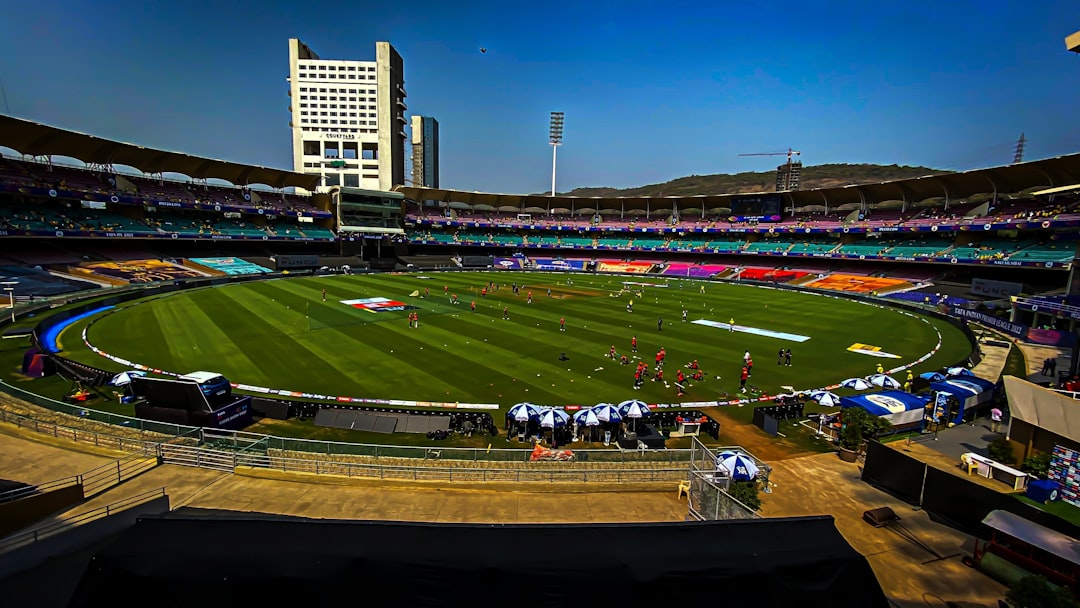
Artificial intelligence is no longer a sidecar to elite sport; it is moving into the core operating system of cricket. The biggest shift is not just that models can predict outcomes, but that they can help teams, broadcasters, sponsors, and fans make better decisions in real time. Facebook’s framing of AI in sports maps neatly onto cricket’s most urgent needs: identifying player performance patterns, automating highlights at scale, personalizing streams for different fan segments, targeting sponsorship more intelligently, and supporting umpiring with faster decision assistance. For a broader strategy lens on how AI is changing the content stack, see our guide to building a niche AI playbook and the practical thinking behind measuring what matters in new tech rollouts.
In cricket, the stakes are unusually high because the sport is rich in data but also full of context that raw numbers can miss. A batter’s strike rate means different things in the powerplay, at altitude, on a two-paced pitch, or against a left-arm spinner bowling wide of off stump. That is why the best AI in sports systems do not replace cricket expertise; they amplify it. They ingest ball-by-ball data, tracking feeds, video, weather, venue history, and workload trends to surface decisions that coaches, directors, and broadcast teams can trust. The opportunity is huge, but so are the implementation risks, from model bias and overfitting to privacy, explainability, and production latency.
Pro tip: The most valuable AI systems in cricket do not answer “who is good?” They answer “good at what, under which match conditions, and with what confidence?”
1. Player Profiling: The AI Engine Behind Selection, Scouting, and Matchups
How machine learning builds richer player profiles
Player profiling is the most obvious front line for AI in cricket because the sport is already data-dense. A useful model can go beyond traditional averages and isolate micro-signals such as release point drift, boundary-hitting zones, dot-ball susceptibility, death-overs economy under pressure, and how a bowler changes length after being hit for six. That kind of machine learning helps teams move from intuition-led scouting to evidence-backed planning, and it is especially powerful when combined with fitness and workload data. For teams building internal systems, the operational logic is similar to the planning in predictive maintenance from telemetry: the model is less about flashy prediction and more about catching small shifts before they become failures.
In practical cricket terms, player profiling can help selectors answer questions like whether a batter is vulnerable to hard length on two-paced surfaces, whether a spinner’s variations are still effective after 35 overs, or whether a fast bowler’s injury risk rises after back-to-back short turnaround games. These profiles are also more durable than highlights or narrative-driven commentary because they update continuously. A smart profiling layer can combine domestic, franchise, and international performance across formats, then compare form against role-specific benchmarks instead of generic batting or bowling averages. That matters because a number-one death bowler and a middle-overs enforcer should never be judged by the same template.
Selection, opposition analysis, and workload management
The best use case for AI profiling is not to “pick the XI by computer,” but to sharpen human selection decisions. Coaches can use the model to simulate likely matchups: how a batter handles wrist spin in the middle overs, how a seamer performs with an older ball, or how a wicketkeeper-batter adjusts when facing short balls early. This creates a more contextual selection model that avoids the trap of overreacting to one big innings or one expensive spell. It also supports workload planning by flagging when a player’s movement patterns or bowling output suggest fatigue. For cricketing organizations exploring structured AI adoption, our framework on application frameworks for complex tech rollouts is a useful way to think about phased deployment.
There is also a commercial upside to profiling. Broadcasters and digital publishers can use player archetypes to build better previews, fantasy content, and tactical explainers. Fans do not only want “best players”; they want to know which type of player fits which conditions. That is where AI can create richer, more trustworthy storytelling than recycled hot takes. The right system turns scattered match data into a living scouting file, which is exactly what modern cricket needs.
Risks: bias, overfitting, and false certainty
The major danger in player profiling is false confidence. A model trained on a limited sample of domestic matches may underperform in international cricket where pressure, bowling quality, and match tempo are completely different. Bias can also creep in if the data overweights recent form or high-profile leagues while ignoring smaller competitions where role fit is more instructive than headline stats. Teams should treat AI profiles as decision support, not verdicts. Good governance matters here, and so does access control—especially when player medical or workload data are involved, similar to the caution required in securing sensitive predictive analytics platforms.
2. Automated Highlights: Turning Massive Match Feeds Into Instant Storylines
Why highlights are an AI sweet spot for cricket tech
Cricket produces long, layered matches with dozens of potential “must-watch” moments: wickets, dropped catches, streaky boundaries, run-out chances, batters surviving close calls, and sudden momentum swings. Automated highlights are one of the easiest and highest-ROI applications of AI because the output is immediately visible to fans. A model can detect emotional peaks using audio spikes, scoreboard shifts, wicket events, and video cues, then stitch together packages for live social, post-match recaps, and format-specific summaries. This is especially valuable for audiences who cannot watch an entire Test day or even a full T20 innings.
The editorial advantage is enormous. A highlights engine can create different cuts for different audiences: a six-minute tactical recap for superfans, a 60-second social reel for casual viewers, or a wicket-only digest for commuters. That is where the future of streaming strategy becomes relevant. Teams and broadcasters should avoid chasing every trend and instead design highlight logic around audience intent. A fan following a domestic league may want every wicket; a sponsor may want branded moments; a fantasy player may want dismissal patterns and bowling changes.
Editorial speed, accuracy, and human oversight
Automation does not eliminate editorial work; it changes its shape. Someone still needs to verify whether the AI has captured the right clip, tagged the right player, and shown the complete sequence rather than a misleading fragment. Cricket is full of context-heavy moments: a wicket may look routine until you realize the batter was targeting a specific bowler, or a dropped catch may be more meaningful because the field was spread to protect a boundary. Smart production teams pair AI clipping with human review, especially for marquee matches, much like creators who use structured timestamping workflows in repurposing long-form content.
The strongest automated highlights systems are also multilingual. If a broadcaster serves fans across regions, the same event needs localized captions, transliterated player names, and culturally relevant framing. That is where the future intersects with fan-first reporting and regional access, not just one global English feed. Cricket’s mass market is far bigger when highlights are fast, local, and searchable.
Commercial value for media rights and social distribution
For rights holders, automated highlights are not just a convenience—they are a monetization engine. Faster turnaround means more impressions, more shareability, and more sponsor inventory across platforms. It also allows broadcasters to package moments by audience segment, which can increase watch time across short-form and long-form surfaces. The more usable the highlight layer becomes, the stronger the case for deeper audience segmentation, a concept that also appears in AI-powered recommendation systems. In cricket, recommendations might mean serving fans the overs they are most likely to care about, not just the match as a whole.
3. Personalized Broadcasts: One Match, Many Experiences
How hyper-personalization changes the viewing product
Personalized broadcast is one of the most disruptive uses of AI in sports because it changes the very definition of a live feed. Instead of one static production for every viewer, broadcasters can tailor overlays, commentary depth, camera preference, and statistical emphasis based on fan behavior. One viewer may want wicket probability, wagon wheels, and bowling-length maps; another may want a cleaner cinematic feed with minimal on-screen clutter. A third may prefer regional-language commentary, local player stories, and simpler tactical cues. This is where cricket can become truly fan-first instead of one-size-fits-all.
The comparison with home entertainment is useful: a great broadcast is no longer just about picture quality; it is about the complete viewing environment. That is similar to the logic explored in home theatre upgrades, where the experience improves when the setup matches the viewer’s preferences. In cricket, personalization may mean a feed optimized for fantasy users, a feed for tactical purists, or a beginner mode that explains field settings and match situations in plain language. The power of AI is that it can route each audience to the right version in real time.
Regional language, accessibility, and fan retention
Personalized broadcast is also the best answer to regional-language demand. In cricket markets with multiple languages, broadcasters that adapt commentary, graphics, and explanations can dramatically broaden reach. This is not just translation; it is localization. A good local-language product knows which players need introductory context, which domestic rivalries matter, and how to explain a required run rate without sounding mechanical. For teams and platforms, that creates a retention advantage because fans are more likely to stay when they feel the broadcast speaks their language, both literally and culturally.
From a product perspective, personalization also supports accessibility. Fans with different attention spans, device types, and data constraints can choose leaner feeds with fewer heavy graphics. Those on premium connections can unlock advanced visualizations, split screens, and alternate camera angles. This product philosophy is closer to modular content design than traditional TV, and it aligns with the broader principle of selecting tools that fit user intent rather than forcing every user into the same funnel.
Next steps for broadcasters
Broadcasters should begin with lightweight personalization layers before trying to rebuild the entire production workflow. Start with language selection, player-follow mode, and stats-overlay toggles, then expand into AI-generated contextual prompts and optional coaching-style commentary. The trick is to preserve trust: viewers should always know when a feed is personalized, what data is driving it, and how to switch back to the default stream. If broadcasters get this right, they can improve satisfaction without fragmenting the audience.
4. Targeted Sponsorships and Monetization: Matching Brands to Cricket Moments
AI as the sponsor-matching layer
Cricket sponsorship has always been about context, but AI can make that context far sharper. Instead of selling broad logo placement, teams and broadcasters can offer targeted sponsorship based on match situation, player affinity, viewer segment, and location. A hydration brand may want to appear during powerplay breaks in hot conditions; a fantasy platform may sponsor batting matchups; a local retailer may buy visibility only for viewers in a specific region. This is the same strategic logic as newsjacking commercial signals: the better you understand the moment, the better you monetize it.
For cricket, the upside is particularly strong because the sport already contains naturally packaged moments that fit sponsor narratives. Strategic timeouts, innings breaks, milestone graphics, player interviews, and tactical analysis segments are all premium surfaces. AI can dynamically match sponsorship inventory to fan behavior and content type, rather than relying solely on static pre-sold ad slots. That can improve fill rates, CPMs, and relevance at the same time.
Balancing revenue with viewer trust
The downside is obvious: excessive targeting can feel invasive or overly commercial if not handled carefully. Fans are highly sensitive to overbranding, especially during tense match moments. Broadcasters need guardrails so that sponsorship does not interfere with the viewing experience or distort editorial integrity. In practice, this means limiting ad density, labeling sponsored insight clearly, and separating commercial recommendations from independent analysis. Good monetization depends on trust, and trust depends on restraint.
There is also an opportunity for merchandise and ticketing teams to use AI signals more effectively. A fan who follows a player profile page, watches a domestic league preview, or repeatedly checks venue information may be ready for a relevant offer—such as official tickets, team jerseys, or collectible drops. The playbook is familiar from niche sports affiliate strategy and from product-personalization thinking in custom print personalization. Cricket businesses should think of sponsorship as a relevance problem, not just an inventory problem.
5. Real-Time Umpire Assistance: Decision Support Without Replacing the Umpire
Where AI fits in the decision chain
Real-time umpire assistance is one of the most sensitive but promising uses of AI in cricket. The goal is not to automate judgment away from officials, but to provide faster and more consistent input for close calls. AI can assist with ball tracking, edge detection, no-ball monitoring, front-foot verification, stumpings, and boundary decisions when feed quality is strong enough. Done well, this reduces latency and improves confidence in the final call. Done badly, it creates confusion, delays, or a sense that the technology is making decisions behind closed doors.
This is where cricket can learn from other low-latency systems. The technical requirements are similar to regulated trading platforms, where speed, audibility, and reliability matter equally. The system must be resilient, explainable, and capable of handling edge cases under pressure. If the model is uncertain, it must say so quickly and clearly. That transparency matters as much as accuracy.
Pros: consistency, speed, and reduced human error
The strongest argument for umpire assistance is that it can reduce obvious errors and improve the fan’s confidence in officiating. Players and viewers accept that cricket is a game of fine margins, but they also expect the technology to be fast and understandable. AI can help standardize line calls, improve the speed of review workflows, and flag anomalies that human officials may miss in real time. The more precise the tooling, the less likely a match turns into a controversy over preventable mistakes. And when the system is strong, broadcasters can explain the review path more clearly to audiences.
But there is a high bar for adoption. Cricket has already experienced the tension between the spirit of the game and the complexity of decision technology. AI assistance should therefore be introduced as an augmentation layer: supporting officials, not overwhelming them. A phased approach is essential, similar to how teams would stage a new infrastructure initiative in an internal innovation fund. Pilot, measure, validate, and only then scale.
Cons: transparency, legal risk, and fan backlash
When technology affects outcomes, the burden of proof rises sharply. If the data feed is inconsistent, if camera angles are incomplete, or if the model is opaque, fans will quickly question legitimacy. Leagues and broadcasters need clear policies on what AI can and cannot decide, how overrides work, and how disputes are logged. They should also publish quality thresholds for deployment so that fans and teams know what level of confidence underpins each assistance layer. A transparent system builds credibility; a hidden one creates suspicion.
6. Building the Cricket AI Stack: Data, Governance, and Operating Model
What the stack actually needs
Successful cricket AI is not just about algorithms. It requires a reliable stack that includes data ingestion, identity and permissions, model management, edge or cloud inference, and a clean user interface for analysts, coaches, producers, and fans. This is where product teams must think beyond isolated pilots. The system should be designed around reusable components, not one-off experiments. For a useful parallel, see how teams can structure stack selection tradeoffs when accuracy and governance are both non-negotiable.
At minimum, cricket AI needs ball-by-ball event data, player tracking where available, video metadata, injury and workload data, venue and weather feeds, and content distribution analytics. Without that foundation, every downstream feature becomes fragile. A highlight generator is only as good as its event detection. A player profiling model is only as good as its inputs. A personalized broadcast is only as good as the behavioral data behind it.
Governance, privacy, and explainability
Cricket organizations must define who can access what. Medical information, training loads, and internal scouting reports should not be casually exposed across departments. Model explainability is equally important: if a selection model says a player is likely to underperform, coaches need to understand the main drivers, not just the label. This is especially true when decisions affect contracts, selection, or public criticism. Strong governance also prevents the “black box” perception that often slows adoption in professional sport.
Broadcasters should establish editorial and technical review processes so that AI-generated clips, overlays, and prompts are checked for accuracy and tone. Human oversight is not a weakness; it is the trust layer. If your organization is thinking about how to scale responsibly, the principles in safe-answer patterns for AI systems are a good fit for sports products that must refuse, defer, or escalate when confidence is low.
Commercial operating model and team alignment
The final piece is organizational. AI cannot sit in one silo and expect adoption. Cricket teams, data staff, coaches, broadcast producers, sponsorship sales, and legal/compliance teams need shared workflows. A sponsor team may want audience segmentation data; a production team may want clip automation; a coach may want a matchup forecast; a data team may want model calibration feedback. Without alignment, the stack fragments into duplicate tools and conflicting priorities. That is why internal education and cross-functional rollout matter just as much as model quality.
7. Pros, Cons, and What Comes Next
Where AI creates immediate value
The most immediate wins in cricket are automated highlights, player profiling, and personalized broadcast layers. These areas have clear ROI because they solve visible fan and team pain points. They also create data flywheels: more usage produces more interaction data, which improves future recommendations. On the commercial side, targeted sponsorship and merchandising become more effective once audience and context signals improve. For media businesses, the upside is similar to the logic behind partnering with mission-aligned organizations: relevance and trust compound each other.
Where teams should be careful
The biggest risks are overpromising, under-governing, and deploying without clear fallbacks. Player profiling can drift into false certainty. Automated highlights can miss context or mislabel moments. Personalized broadcasts can confuse users if the default option disappears. Umpire assistance can trigger backlash if it feels opaque or inconsistent. The rule is simple: never launch a cricket AI feature that cannot be explained in one sentence to a fan, a coach, and a sponsor.
Next steps for teams and broadcasters
Teams should begin with one use case that has strong data quality and visible business value, then expand iteratively. Broadcasters should pilot personalization on lower-risk surfaces like commentary selection, highlight filters, and stat overlays before moving into deeper stream customization. Sponsorship teams should test event-based ad products with transparent labeling and frequency caps. Umpiring technology should be evaluated in controlled settings with published accuracy standards and human override rules. If you want a broader perspective on implementation discipline, adoption metrics are essential for separating hype from real impact.
8. A Practical Comparison of the Five Frontline Roles
Below is a simple decision table that shows how the five AI roles differ in value, risk, and readiness. The key takeaway is that not every AI application should be rolled out at the same speed. Some are better suited to content and commerce, while others belong inside performance and officiating workflows. Use this as a prioritization tool for product, coaching, and media teams.
| AI role | Primary use in cricket | Best for | Main risk | Readiness level |
|---|---|---|---|---|
| Player profiling | Selection, scouting, matchup planning | Teams, analysts, academies | Bias and overfitting | High |
| Automated highlights | Fast clip creation and recaps | Broadcasters, digital publishers | Context loss | Very high |
| Personalized broadcast | Localized feeds, overlays, commentary modes | Streaming platforms, rights holders | Fragmented UX | High |
| Targeted sponsorships | Contextual ad matching and merch offers | Commercial teams, e-commerce | Privacy and over-commercialization | Medium-High |
| Umpire assistance | Decision support for close calls | Match officials, leagues | Trust and explainability | Medium |
9. The Road Ahead: What Cricket’s AI Future Should Look Like
From isolated tools to connected match intelligence
The next phase of cricket tech will not be a single super-tool. It will be a connected ecosystem where player profiling informs pre-match previews, automated highlights feed fan engagement, personalized broadcasts adapt to each audience, sponsorship uses context intelligently, and umpire assistance improves the integrity of live play. The value comes from the loop between these systems. A fan who watches a tactical highlight may follow a player profile, then choose a personalized stream, then respond to a relevant sponsor offer, then return for the next match. That is a flywheel, not a feature.
Cricket organizations should think in terms of pilots with clear KPIs: reduced clip turnaround time, improved watch time, higher sponsor CTR, lower decision latency, and better coach confidence in model outputs. The most successful teams will be those that treat AI as an operating discipline rather than a novelty. They will invest in data quality, internal training, and fan-facing transparency. In a market full of hype, the winners will be the ones that make AI feel useful, not just impressive.
What fans should expect next
Fans can expect more nuance, more speed, and more control. The best AI in sports will make cricket easier to follow without flattening the drama. That means richer context for casual viewers, sharper tools for serious fans, and more efficient workflows for teams and broadcasters. It also means smarter regional coverage, cleaner highlight discovery, and a better balance between commerce and content. If cricket gets this right, AI will not replace the game’s human heartbeat; it will help more people hear it clearly.
Final takeaway
Facebook’s five AI applications in sports map cleanly onto cricket’s next growth phase because the sport has both the data depth and the audience complexity to benefit from them. Player profiling sharpens performance decisions. Automated highlights scale storytelling. Personalized broadcasts expand reach and retention. Targeted sponsorships improve monetization. Real-time umpire assistance strengthens decision quality. The challenge now is execution: build with governance, launch with clarity, and keep the fan experience at the center.
Key stat to remember: The best cricket AI is not the most automated system in the room. It is the one that consistently improves a decision, a broadcast, or a fan experience without sacrificing trust.
FAQ: AI in Cricket
1) Is AI in cricket mainly for elite international teams?
No. Elite teams may adopt first, but domestic leagues, broadcasters, academies, and even digital publishers can benefit immediately from highlight automation, audience segmentation, and player analysis tools. Smaller organizations often gain the fastest ROI because AI removes manual work that would otherwise consume limited staff time.
2) Can AI actually improve umpiring decisions?
Yes, but only as decision support under clear rules. AI can help with tracking, detection, and review speed, but the system must remain transparent and auditable. The goal is consistency and speed, not hidden automation that fans cannot understand.
3) What is the biggest risk of player profiling models?
The biggest risk is overfitting to a narrow data set and turning probabilities into false certainty. Cricket is highly context-dependent, so models should be interpreted alongside pitch conditions, opposition strength, role, and recent workload.
4) How does personalized broadcast help fan engagement?
It lets different audiences watch the same match in different ways. Casual fans can get simpler context, fantasy users can get live tactical data, and regional audiences can get local-language commentary and culturally relevant framing. That flexibility increases retention and satisfaction.
5) What should teams and broadcasters do first?
Start with one high-value, low-friction use case such as automated highlights or player profiling. Set clear KPIs, build human review into the process, and expand only after accuracy and trust thresholds are proven. The smartest rollout is iterative, not all-at-once.
Related Reading
- Choosing the Right OCR Stack for Healthcare - A useful model for comparing build-versus-buy decisions in complex data systems.
- The Hidden Cost of Chasing Every Trend - A sharp framework for deciding what stream features are worth shipping.
- AI-Powered Product Recommendations - Great for understanding personalization logic that can also power fan experiences.
- Cloud Patterns for Regulated Trading - Helpful if you are designing low-latency, auditable sports data workflows.
- Safe-Answer Patterns for AI Systems - A practical reference for governing AI systems that need confidence thresholds and fallback behavior.